№ 05Campaigns
No sale this week: Black Friday visuals for a small shop
Black Friday alternatives for small business: six visual ideas for a shop sitting out the sale. Say what is happening at your counter this November.
№ 07CampaignsInspiration
Consistent AI characters earn their place frame by frame. Edit a six-scene greengrocer campaign as a contact sheet and see why some faces get cut.
Here, all six scenes were kept.
The campaign follows a fictional, AI-generated adult at a contemporary greengrocer shop. Put the door-opening frame (#2) beside the casting reference (#1) and decide whether you would cast both faces as the same person. The apron will do some of the persuading, so look past it.
We would be slow to approve a lovely patch of window light if the face underneath it felt like a new casting. A campaign needs room for different expressions, but you should be able to explain why each face belongs.
Keep #2. The three-quarter face at the glass door is recognisably the same man as the reference. In #1, he ties his stone-grey apron at a pale oak counter. In #2, he pulls the door open from the pavement in early sun, with his reflection in the glass. The reflection leaves his face unobscured, so you can compare the two directly.
Start with both photographs at the same display size, then compare face crops at a similar scale. Cropping out the apron gives you a second view of the casting decision.
The casting brief asks for a sturdy 43-year-old greengrocer with warm brown skin. The prompts ask for short salt-and-pepper curls and a broad nose throughout the day. A slightly hooded left eyelid and an uneven closed-mouth smile give you specific details to follow when the expression changes.
Generate the reference before beginning the six scenes. Both eyes and the whole mouth need to be readable in the frame you approve. If you choose a face that differs from the brief, update the identity wording to describe that face and save the full image as your reference.
A short casting note makes the choice easier to discuss with another editor. Describe the nose shape and where the hairline sits; “friendly greengrocer” offers little help when two candidates look equally friendly. Record the smile only if the reference shows it clearly.
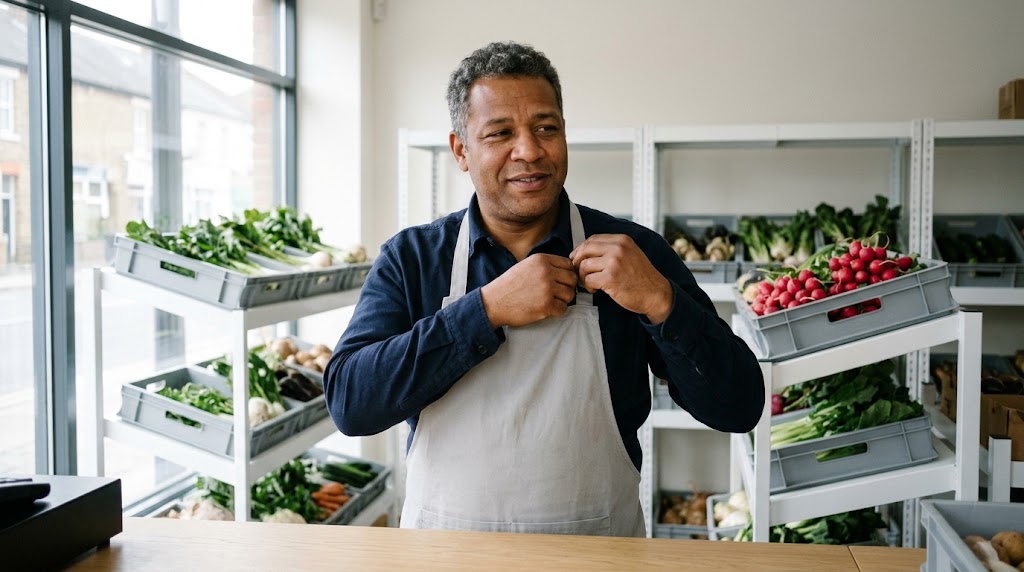
Example image made with Google Nano Banana 2.1 from the prompt below.
Environmental portrait photograph. Medium shot of a fictional 43-year-old greengrocer with a sturdy build and warm brown skin, short salt-and-pepper curls, a broad nose and a slightly hooded left eyelid. Wearing a navy cotton overshirt under a clean pale grey canvas apron, they adjust the apron strap at a pale oak counter in a modern greengrocer shop. Frame the face almost square on at eye level, gaze on a colleague just beside the camera, with both eyes and the full mouth readable. A small closed-mouth smile rises slightly higher on their left. Leave room around the shoulders for white steel shelving with produce in pale grey plastic trays and a grey tray of red radishes; no wooden crates or boxes anywhere. Bright morning daylight from the plate-glass front at camera left gives gentle shadows across the face; natural colour, quiet neutrals with the radishes the brightest accent. Unaware of the camera, mid-task in a clean, well-kept shop. Nikon D850 with Nikkor 24-70mm f/2.8E ED VR at 70mm, f/5.6, 1/250 second.
The photorealistic prompt collection offers other ways to specify a photographic look. For this campaign, keep one camera and lens family in the prompts while you review the face.
Open the scene's Studio link and attach the single approved reference frame in AI Studio. That original file stays with every scene and retry. We want each candidate judged against the same casting decision, so give the reference a filename nobody will confuse with a later attempt.
The casting recipe above names OpenAI GPT-Image 2.6 Sunburst, at 10 credits per run. The reference shown here was made earlier in Google Flow with Google Nano Banana 2.1. For the six scenes, select Google Nano Banana 2.1, also at 10 credits per run. Keeping the scene model fixed gives you one fewer change to account for during the edit.
The prefilled Studio links set the model and prompt with automatic prompt rewriting off. You still need to attach the reference yourself and choose the aspect ratio: 4:5 for the casting portrait, then 3:2 for each scene.
If your campaign begins as scattered notes, Prompt Crafter can turn them into a scene prompt. Preserve the identity instruction when adapting the action. The prompt-writing guide covers the wider structure if you are taking this method into a different setting.
A day's work gives the sequence a reason to change pace. We want the quiet moments as well as the busy ones; six variations on the same pleasant expression would leave little to edit. Each prompt keeps the identity instruction while changing the situation around it.
The three-quarter view gives you an opening frame with a face you can compare to the reference. Glass reflections can make a face hard to judge, so keep them away from the eyes before deciding how much pavement belongs in the crop.
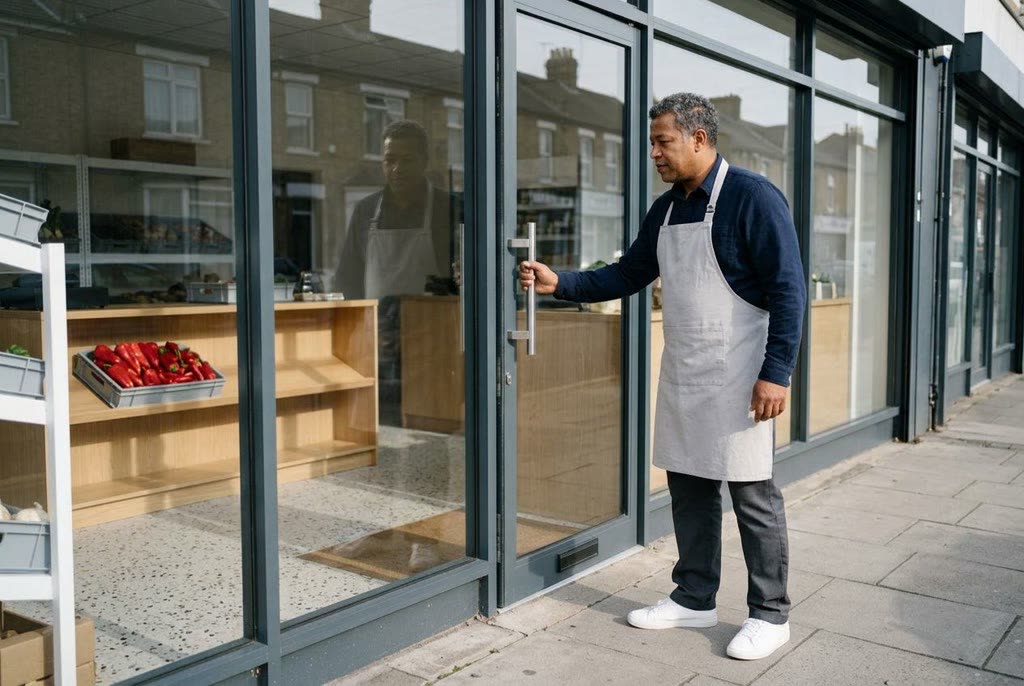
Street photograph. Use the single attached reference as the identity source for this fictional 43-year-old greengrocer with a sturdy build and warm brown skin. Preserve the face proportions and short salt-and-pepper curls, the broad nose and slightly hooded left eyelid. Full shot of the greengrocer in a navy overshirt and clean pale grey canvas apron, pulling open the shop's glass door with one hand. Charcoal trousers fall above clean white trainers. Frame them right of centre, body turned towards the entrance and face three-quarters towards the pavement, eyes on the door handle. Keep the figure three-quarters of the image height and the face clear of reflections. The plate-glass front reveals pale oak shelving and a terrazzo floor; a grey display tray of red pointed peppers sits inside. Clear early sun from camera left lights the face and casts hard-edged shadows on the dry pavement; natural colour, navy and pale stone with the peppers the brightest red. Unaware of the camera, intent on opening the clean, contemporary shop. Nikon D850 with Nikkor 24-70mm f/2.8E ED VR at 50mm, f/8, 1/500 second.
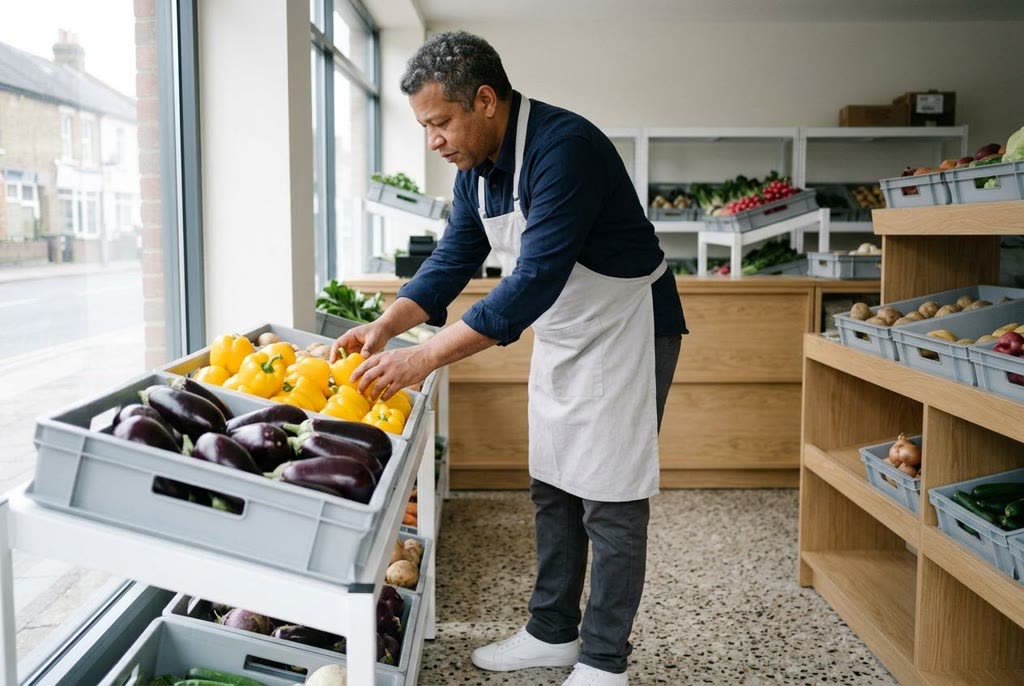
Arranging the peppers gives you a working profile with room for the display. Compare the nose projection and chin with the reference. Allow for the new angle. If a forearm hides the mouth, ask for a clearer view before making the casting decision.
Editorial photograph. Use the single attached reference as the identity source for this fictional 43-year-old greengrocer with a sturdy build and warm brown skin. Preserve the face proportions and short salt-and-pepper curls, the broad nose and slightly hooded left eyelid. Full shot of the greengrocer arranging yellow bell peppers in a pale grey display tray beside purple aubergines in a modern greengrocer shop. A navy overshirt has its sleeves rolled above the elbows beneath a clean pale grey canvas apron; charcoal trousers and clean white trainers complete the work clothes. Frame the figure in left profile at three-quarters of the image height, eyes on the peppers, with the left eye and mouth contour clear above the forearms. Pale oak shelving stands behind the display over a terrazzo floor; no wooden crates. Bright late-morning daylight through the plate-glass front at camera left softly lights the visible cheek; natural colour, rich purple against the yellow peppers as the brightest colour. Unaware of the camera, absorbed in arranging the clean display. Nikon D850 with Nikkor 24-70mm f/2.8E ED VR at 50mm, f/5.6, 1/320 second.
He smiles towards the customer as he hands over a paper bag of green beans. The customer’s hand enters from the right. His face is unobscured, and he is recognisably the same man. Compare the eye spacing and mouth corners with the reference while allowing for the changed gaze.

Editorial photograph. Use the single attached reference as the identity source for this fictional 43-year-old greengrocer with a sturdy build and warm brown skin. Preserve the face proportions and short salt-and-pepper curls, the broad nose and slightly hooded left eyelid. Medium shot of the greengrocer in a navy overshirt and clean pale grey canvas apron, passing a folded kraft paper bag of green beans across a pale oak counter. Frame the greengrocer left of centre with the customer's receiving hand at the right edge; their eyes follow the customer just to camera right and their small closed-mouth smile rises slightly higher on the left. Keep the bag below chest level and the face unobstructed. Steel shelving and a grey tray of green courgettes sit behind the counter; no wooden crates. Clear midday sun enters through the plate-glass front on the left, with the face in bright window recess shade and a sharp patch of sunlight across the counter; natural colour, muted navy and oak with the courgettes the strongest green. Unaware of the camera, attentive to the exchange in the well-kept shop. Nikon D850 with Nikkor 24-70mm f/2.8E ED VR at 50mm, f/5.6, 1/320 second.
He laughs at a colleague in black who gestures at a lemon rolling on the oak table. He has a mug in hand.
This is the weakest likeness of the six. Mid-laugh, his face reads softer and rounder. His hair and build hold, as do the shirt and apron. He is still recognisable, so #5 stays in the edit. Check this frame first when comparing the set with the reference.
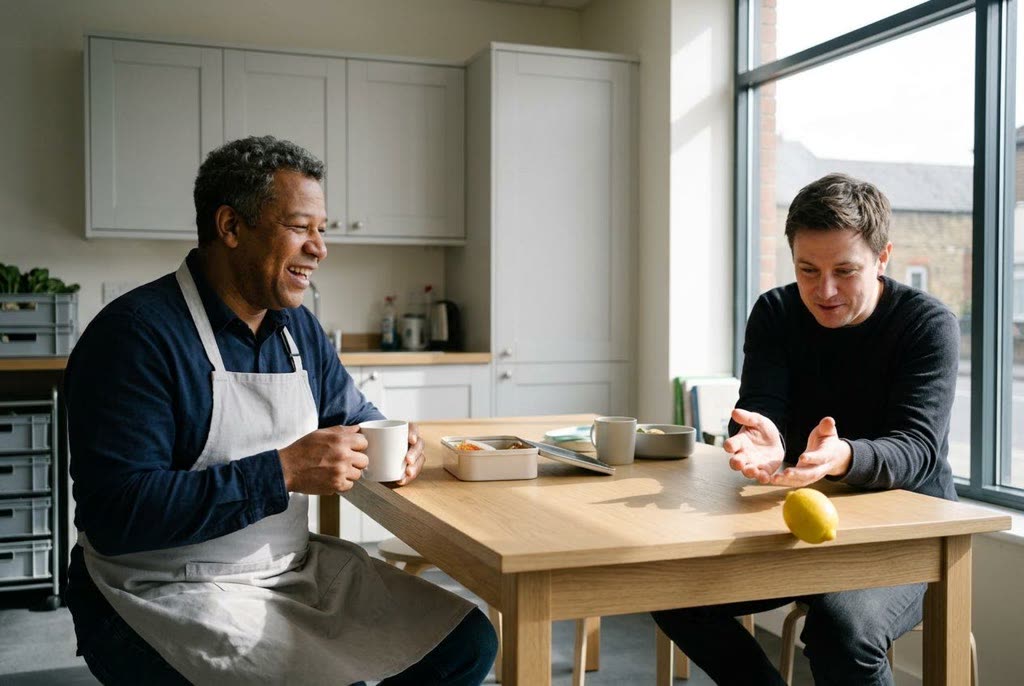
Editorial photograph. Use the single attached reference as the identity source for this fictional 43-year-old greengrocer with a sturdy build and warm brown skin. Preserve the face proportions and short salt-and-pepper curls, the broad nose and slightly hooded left eyelid. Medium shot of the greengrocer laughing during a coffee break at a pale oak table in the shop's contemporary staff area, lowering a plain white mug below chest level. They wear a navy overshirt and clean pale grey canvas apron. Frame their three-quarter face on the left with the full hairline and chin visible; their eyes turn towards a colleague on the right who is catching a lemon that has just rolled off the edge of the table, both hands cupped low. Include the colleague's face and the lemon so the cause of the laugh is visible. A steel-framed window and pale grey cupboards leave space around both people. Early-afternoon sun through the window at camera right lights their faces and throws clear shadows across the table; natural colour, the yellow lemon the brightest accent against pale oak. Both are unaware of the camera, sharing an unposed laugh in the clean staff area. Nikon D850 with Nikkor 24-70mm f/2.8E ED VR at 50mm, f/5.6, 1/500 second.
The tray and cargo bike give the wider frame a job in the campaign. He carries romanesco and radishes past the bike on wet pavement after rain. His face is small in the frame but consistent, and the lower apron shows a few smudges. Judge the full frame at publication size before enlarging the face for inspection. If recognition depends entirely on the apron, a closer composition is worth trying.
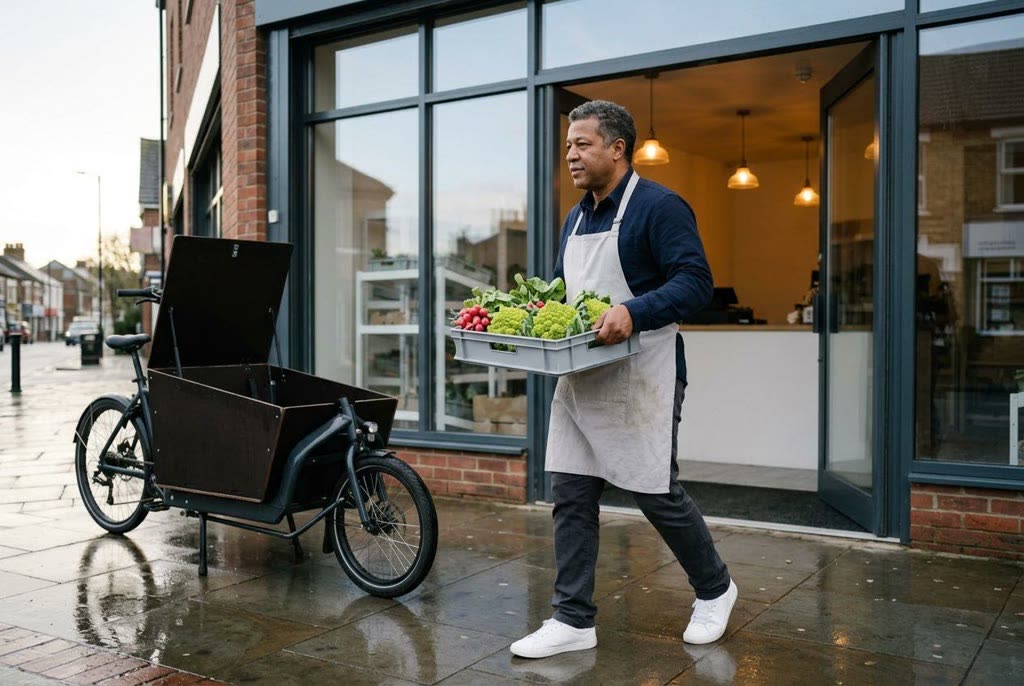
Street photograph. Use the single attached reference as the identity source for this fictional 43-year-old greengrocer with a sturdy build and warm brown skin. Preserve the face proportions and short salt-and-pepper curls, the broad nose and slightly hooded left eyelid. Full shot of the greengrocer carrying a clean grey tray of romanesco cauliflowers and red radishes towards a delivery cargo bike outside the modern shop after rain. They wear a navy overshirt beneath a clean pale grey canvas apron, with charcoal trousers and clean white trainers. Frame them side-on mid-step, figure three-quarters of the image height, head turned slightly towards the bike with a readable three-quarter face. Keep the tray at waist height; show the bike's open front box and the plate-glass doorway behind the figure. Late-afternoon daylight from the clearing sky at camera left lights both eyes; an existing warm pendant inside the doorway casts a small spill on the trailing shoulder. Wet paving reflects the pale sky. Natural colour, bright green romanesco against the red radishes; matter-of-fact movement, unaware of the camera. Shop and bike are contemporary and well kept. Nikon D850 with Nikkor 24-70mm f/2.8E ED VR at 35mm, f/5.6, 1/500 second.
He sits on a wooden chair by the window at dusk, with a pink sky over the street. Empty grey trays sit on the shelves behind him. The three-quarter view still shows the same man. Place this frame beside the door scene to compare the face across the day.
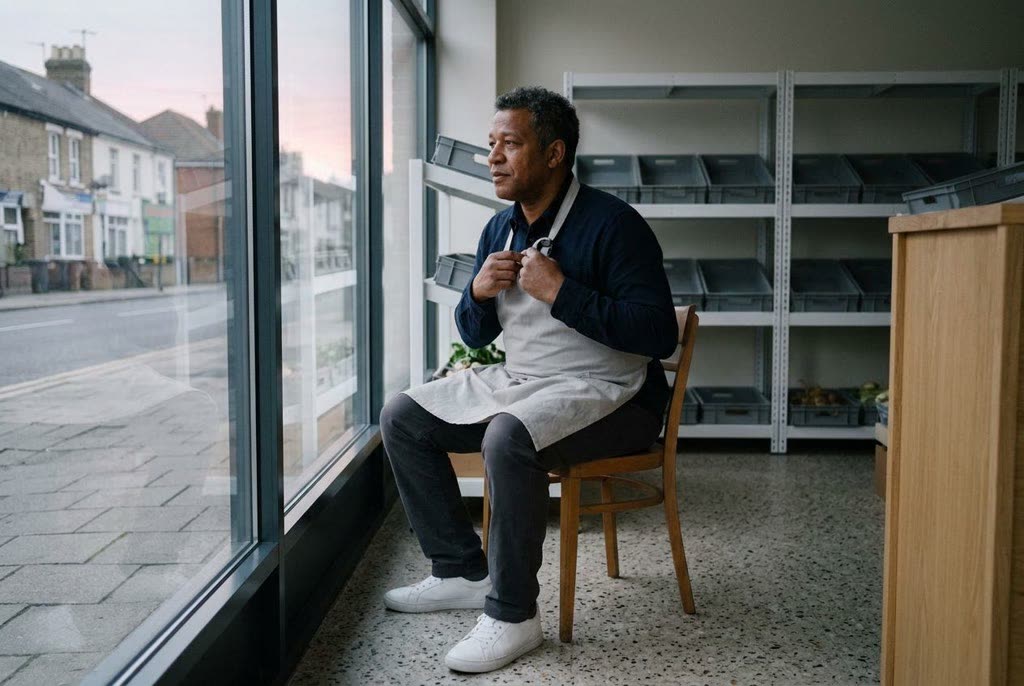
Environmental portrait photograph. Use the single attached reference as the identity source for this fictional 43-year-old greengrocer with a sturdy build and warm brown skin. Preserve the face proportions and short salt-and-pepper curls, the broad nose and slightly hooded left eyelid. Full shot of the greengrocer sitting beside the plate-glass shop window after closing, easing the knot of a clean pale grey canvas apron over a navy overshirt. Their charcoal trouser legs and clean white trainers rest on the terrazzo floor. Frame the seated figure at three-quarters of the image height, face turned three-quarters towards the window and eyes on the pavement outside. Keep both eyes and the closed mouth readable, with relaxed shoulders and tired eyelids. Pale oak shelving and empty grey display trays recede behind the chair. Soft dusk light from the window at camera left reaches the whole face with gentle shadows; the dry street holds a pale pink strip of sky. Natural colour, subdued navy and ash grey with the pink reflection the brightest colour. Unaware of the camera, winding down in the clean, well-kept shop. Nikon D850 with Nikkor 24-70mm f/2.8E ED VR at 50mm, f/4, 1/160 second.
Keep the approved reference beside the scene frames in your layout application. Add enlarged face crops where you need a closer comparison. We want to see what a crop leaves out before approving the photograph.
Make the casting decision first and write down the visible reason for any doubt about facial proportions. A hidden face leaves that decision open. Send it back for another attempt if there is too little to compare with the reference.
Then review the photograph as a campaign asset. A frame can pass the casting check and still crowd the subject against an edge. Keeping that composition note separate gives the next prompt a specific problem to address.
“Check nose width against reference” gives another editor something to inspect; “looks AI” leaves them guessing. If you reject a candidate, preserve it beside its note so the next person can assess the decision without searching through the working folder.
All six scenes were kept, and no face is obscured. The top row runs from reference #1 through #4; the bottom row holds #5 to #7.
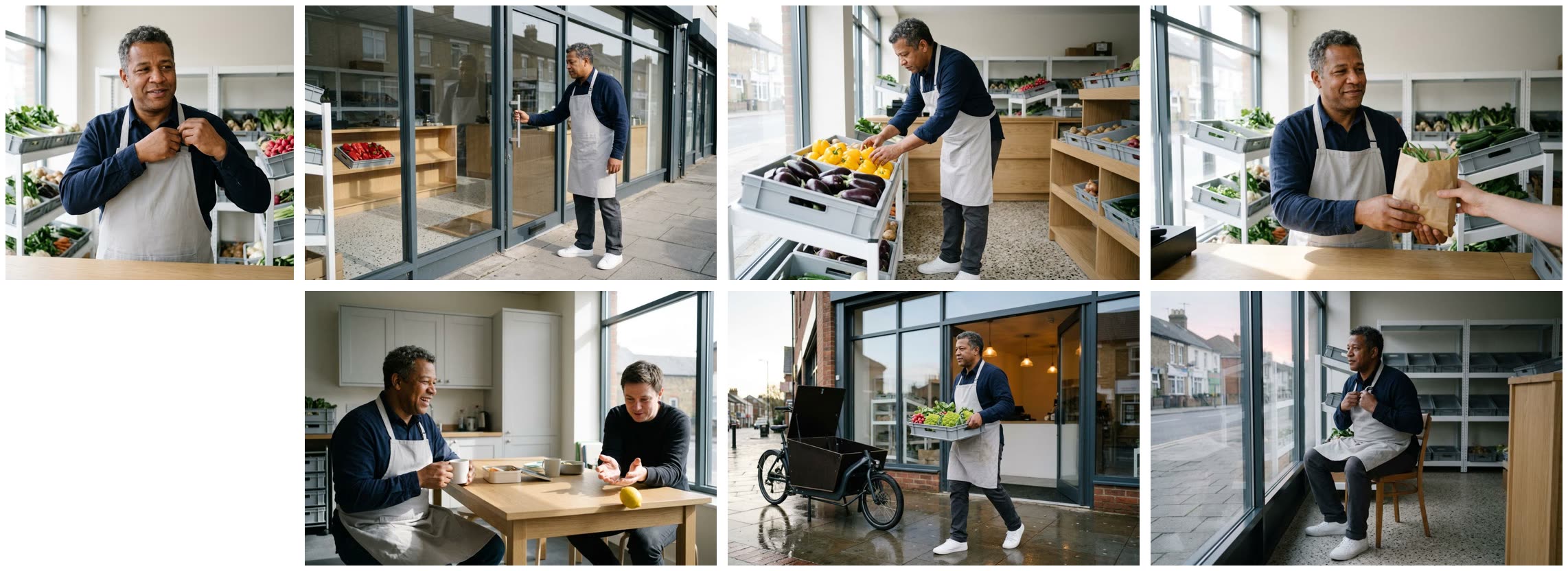
Leave treatment changes until the faces belong together. The guide to photographic AI visuals is a useful companion when you move on to the wider photographic direction.
None of the six scenes needed the conditional profile retry (#8).
When a candidate drifts, we favour a small revision you can judge against the previous attempt. Return to the approved reference and keep the scene wording and model fixed. Add an instruction about the feature that caused the rejection. Record it beside the next candidate.
For a produce-display frame that changes the nose breadth or the hooded left eyelid, use the prompt below. It adds one sentence about those features. If your rejected frame has a different problem, replace that sentence with the detail you need to recover.
Editorial photograph. Use the single attached reference as the identity source for this fictional 43-year-old greengrocer with a sturdy build and warm brown skin. Preserve the face proportions and short salt-and-pepper curls, the broad nose and slightly hooded left eyelid. Match the breadth of the nose and the hooded left eyelid to the attached reference. Full shot of the greengrocer arranging yellow bell peppers in a pale grey display tray beside purple aubergines in a modern greengrocer shop. A navy overshirt has its sleeves rolled above the elbows beneath a clean pale grey canvas apron; charcoal trousers and clean white trainers complete the work clothes. Frame the figure in left profile at three-quarters of the image height, eyes on the peppers, with the left eye and mouth contour clear above the forearms. Pale oak shelving stands behind the display over a terrazzo floor; no wooden crates. Bright late-morning daylight through the plate-glass front at camera left softly lights the visible cheek; natural colour, rich purple against the yellow peppers as the brightest colour. Unaware of the camera, absorbed in arranging the clean display. Nikon D850 with Nikkor 24-70mm f/2.8E ED VR at 50mm, f/5.6, 1/320 second.
Compare the new candidate with the original reference before placing it beside the reject. The whole face still needs inspection, including features the revision did not mention. Save the settings alongside the candidate and record the seed if it is available.
We would hand over enough of the edit for another designer to continue it. Deliver the selected frames with the approved reference and annotated contact sheet. Each frame needs its prompt and model name, plus the aspect ratio and recorded settings. Attempt IDs should lead back to the working files.
Record actual credit use across the whole edit, including rejected attempts. If the client commissions further scenes, the reference file and casting notes give the next editor a starting point. Check the current credit options when costing that work.
The selected campaign is #2 to #7, supplied with casting reference #1. The six scenes were made on 10 November 2026 in cgfaces AI Studio with Google Nano Banana 2.1. Each used the prompt printed above with reference #1 attached. All six ran at 3:2 with automatic prompt rewriting off.
There was one run per scene and no retry. At 10 credits each, the six scenes used 60 Studio credits in total. Reference #1 was made separately in Google Flow.
№ 07 · CampaignsAll stories
№ 05Campaigns
Black Friday alternatives for small business: six visual ideas for a shop sitting out the sale. Say what is happening at your counter this November.
№ 11Design & type
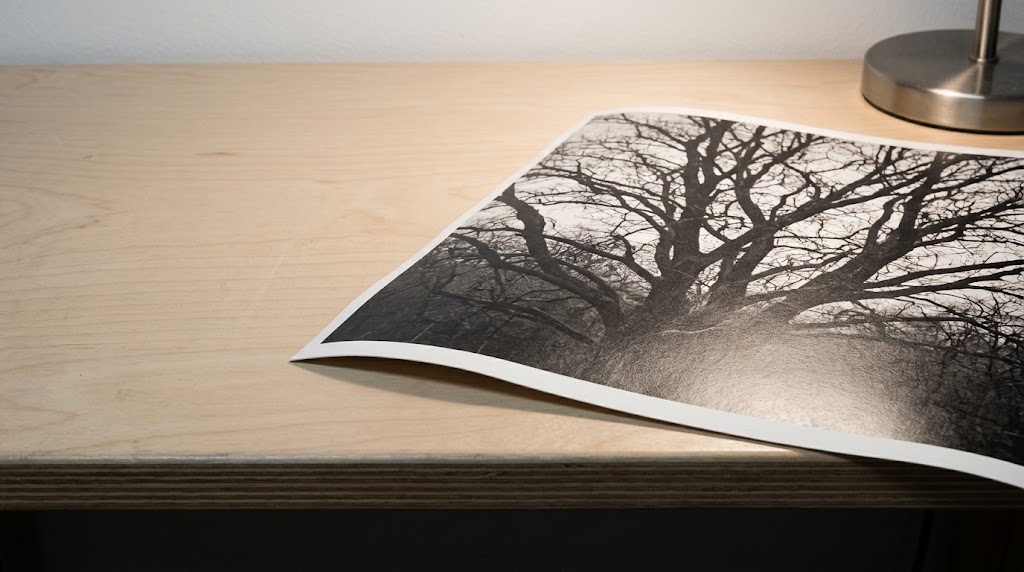
AI social media post design for a darkroom that now opens at 19:00. Use the cgfaces editor to change the time in both layouts before exporting.
№ 10Photography
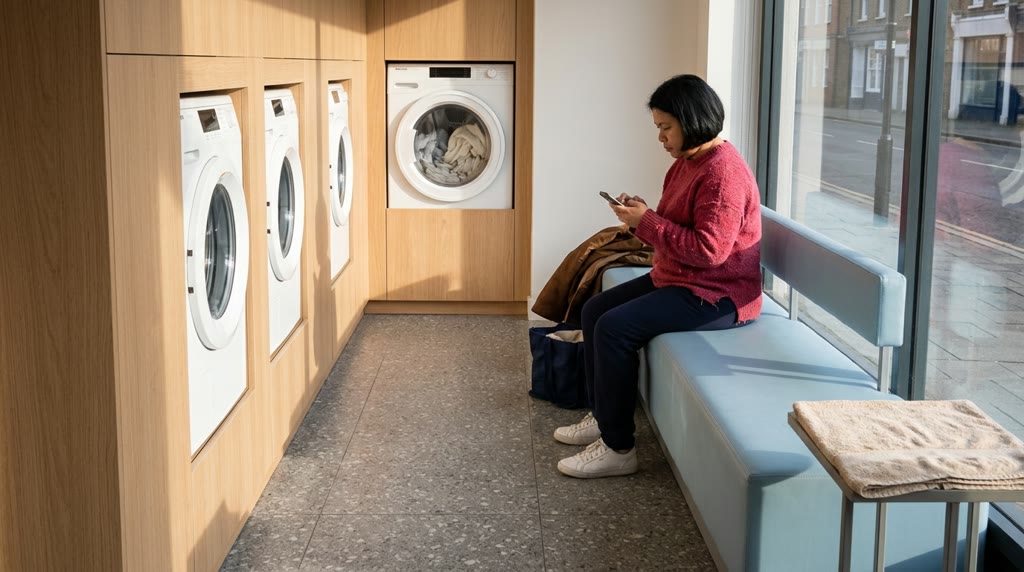
Make an AI photo essay from one imaginary roll of 36 frames. Spend the last wash at a fictional launderette, then edit your roll down to six.