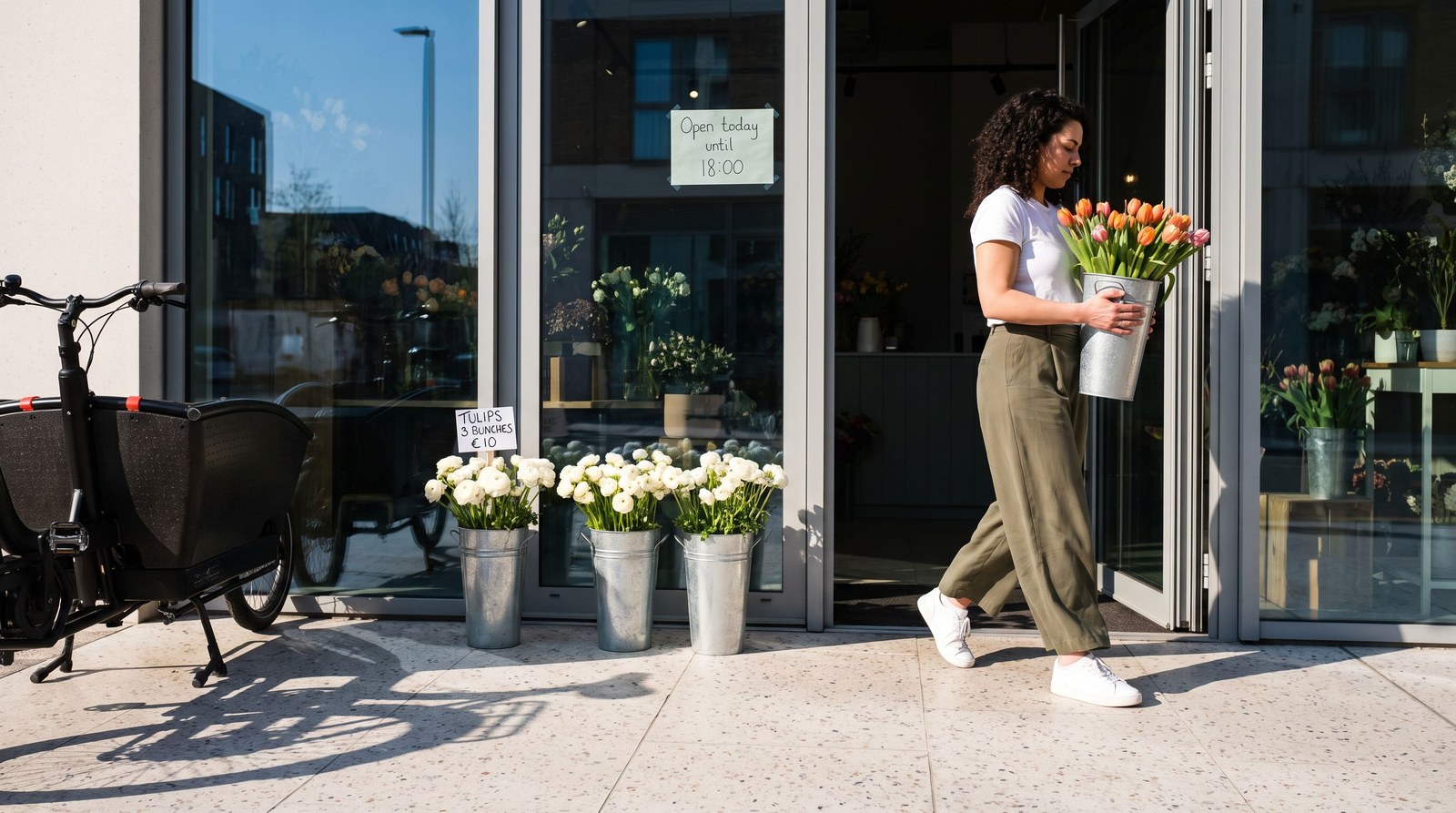
№ 12Design & AI tools review
The florist test: one prompt, fourteen AI image models
One ordinary prompt, run through fourteen AI image models released between October 2024 and October 2026. Read the price card to see what two years changed.
№ 14Design & AI tools reviewTest
What AI image models still get wrong in November 2026: 27 ordinary requests, two tries each, on a current model. It writes almost anything now. It cannot measure.
And it does not know its left hand from its right.
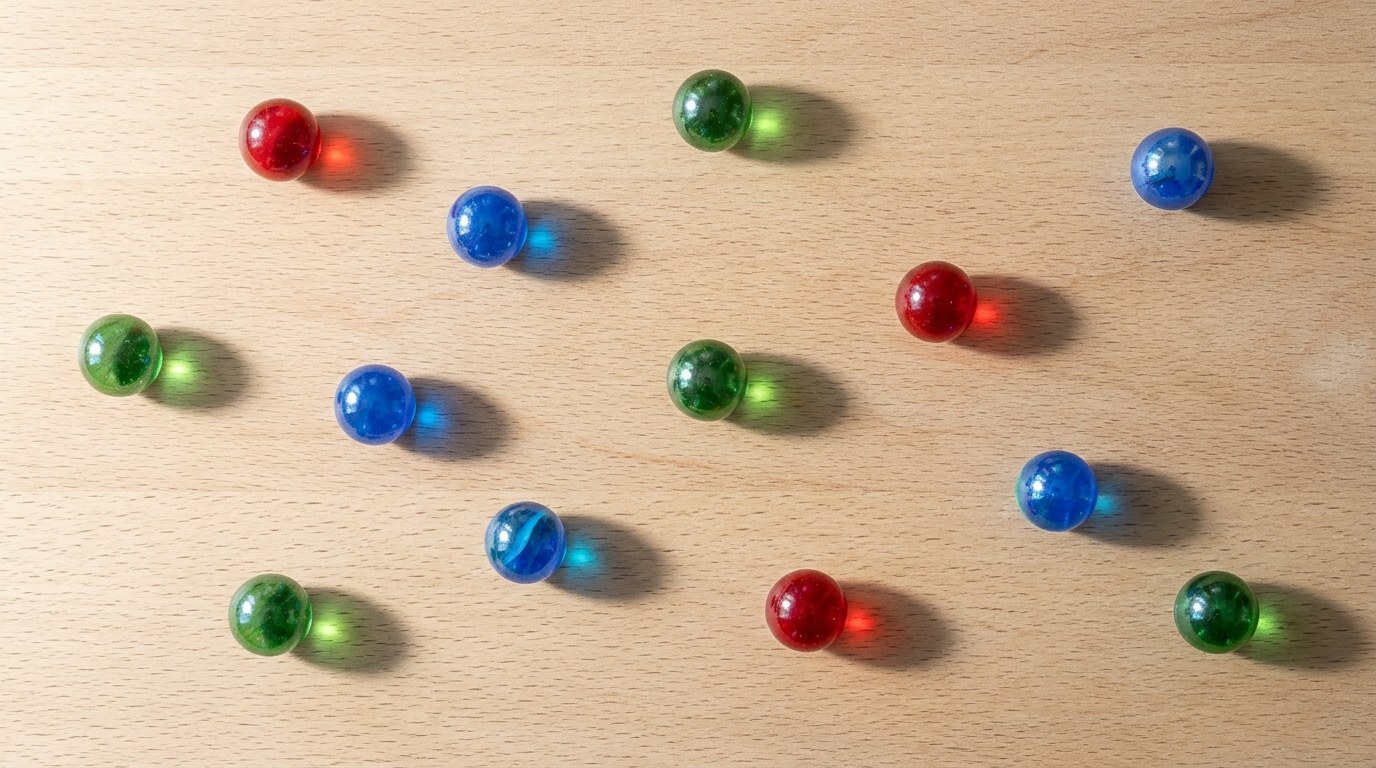
We asked for twelve marbles: three red, four blue, five green. Count the blue ones. The famous failures of 2025 are mostly gone, and what remains is quieter and easy to miss on a deadline.
One model, Google Nano Banana 2.1, on 13 November 2026. Each prompt returned two images, and a request counts as done only when both are right. We will run the same 27 prompts every November.
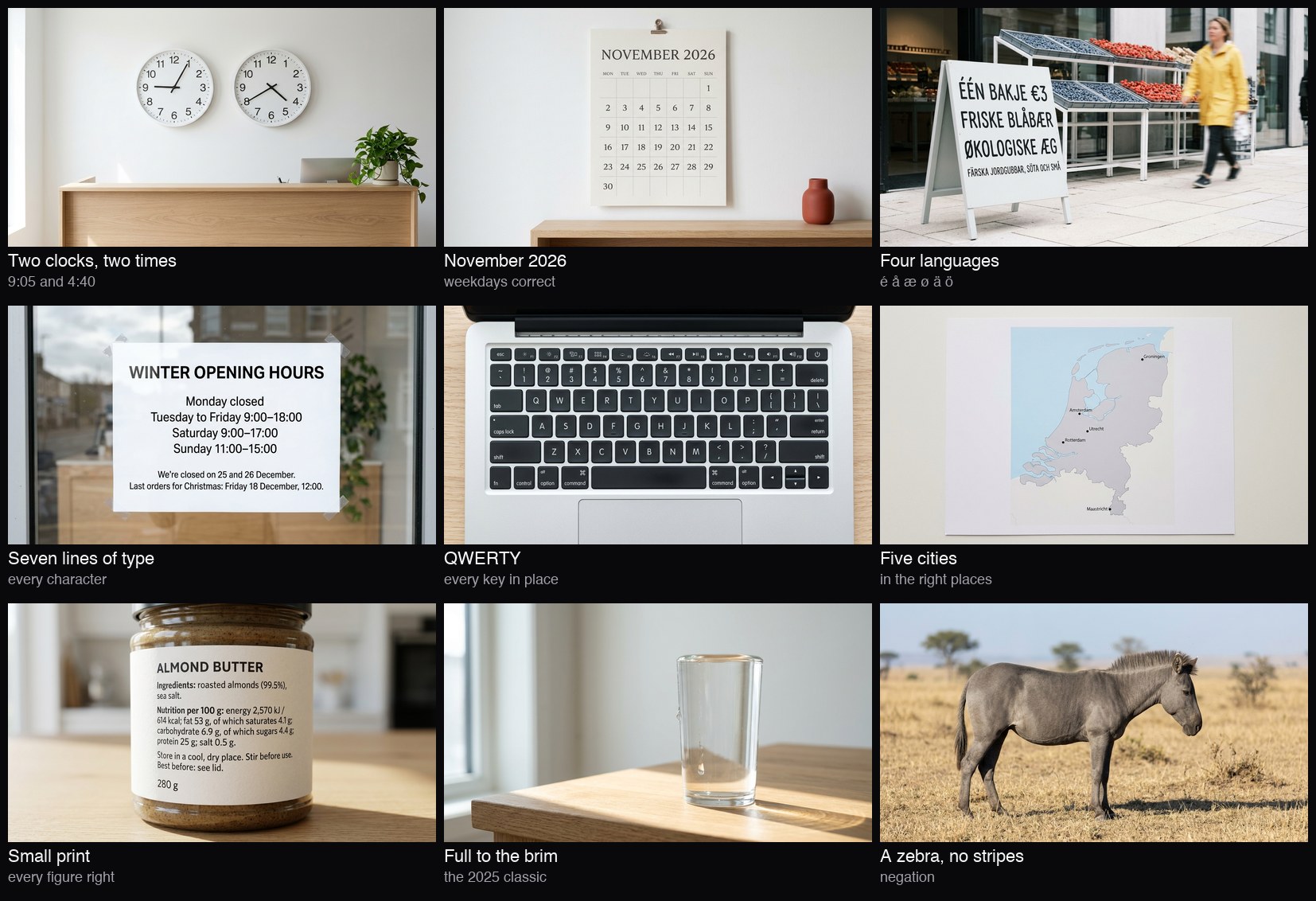
Fourteen of the 27 came out right twice. Two wall clocks showing two different times. A calendar for November 2026 with every date under the right weekday. A sign with é, å, æ, ø, ä and ö. Seven lines of opening hours with an apostrophe and four time ranges. A glass full to the brim, the picture nobody could get in early 2025. A year-old list of what AI cannot do is mostly out of date.
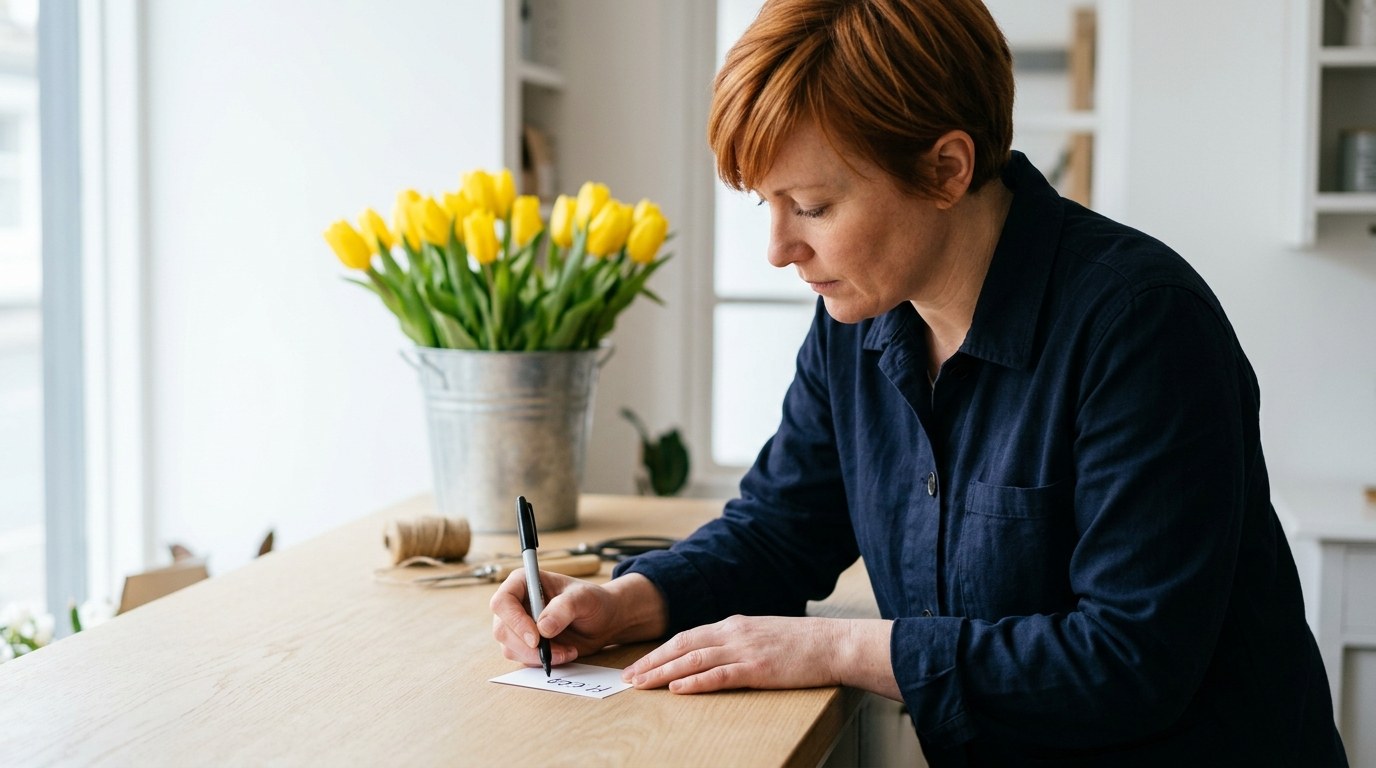
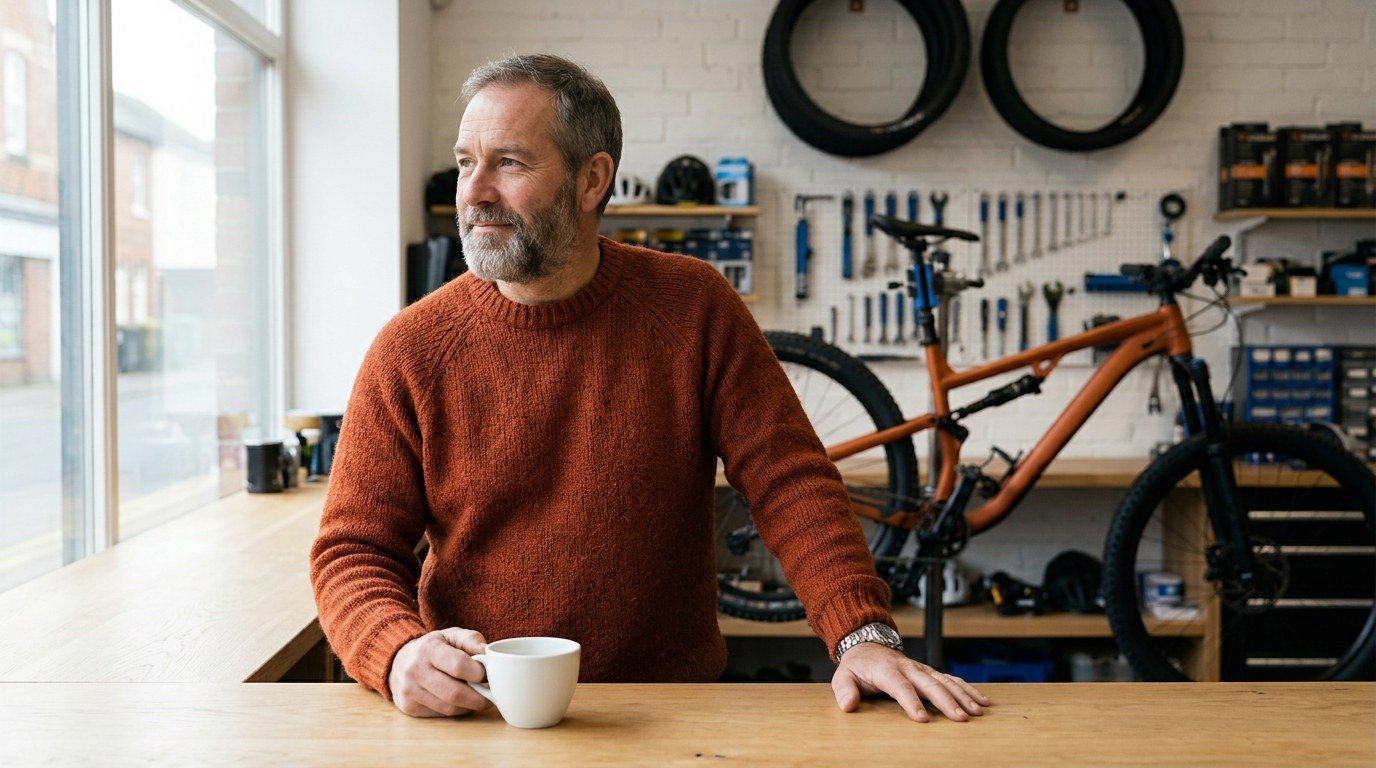
We asked for the pen in her left hand, then for a cup in his left hand and a watch on his right wrist. Four images, four right-handers. Most people in photographs are right-handed, and the model draws most people. If the hand matters, check it. Flip the picture only when no text is in the frame.
Documentary photograph. Close shot of a 41-year-old shop owner with short red hair, in a navy cotton overshirt, writing a price on a small white card with a black marker held in her left hand, while her right hand holds the card flat on a pale oak counter. Frame from her right side at counter height, her eyes on the card, with a zinc bucket of yellow tulips and a white wall behind her. Daylight from a large window in front of her, soft shadows; natural colour, the tulips the brightest thing in the frame. She does not notice the camera. Everything clean and well kept. Canon EOS R5 with RF 85mm f/1.2 at f/4.
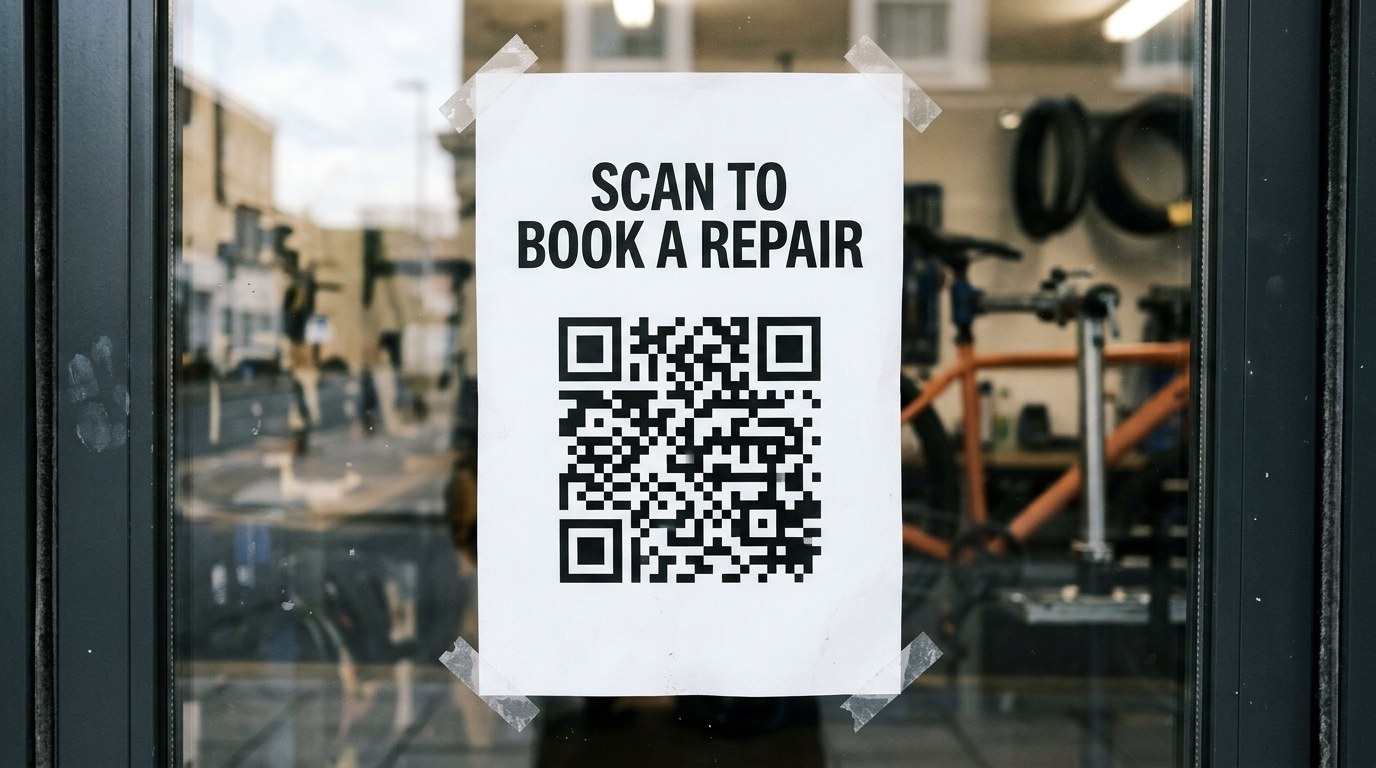
The heading is perfect and the code has all the right squares. It opens nothing. A QR code is a calculation, and the model drew the look of one. Make the code with a QR generator, place it in the design editor and scan it with your own phone before you print fifty.
Street photograph. A white A4 poster taped flat inside the plate-glass door of a contemporary bike shop, photographed straight-on from the pavement outside, the poster filling most of the frame. The poster has the heading "SCAN TO BOOK A REPAIR" in black capitals and, below it, one large black-and-white QR code that opens https://cgfaces.com when scanned with a phone. No other text. Behind the glass, a matte orange bike in a workshop stand, out of focus. Bright overcast light; natural colour. Fujifilm X-T5 with 33mm f/1.4 at f/5.6.
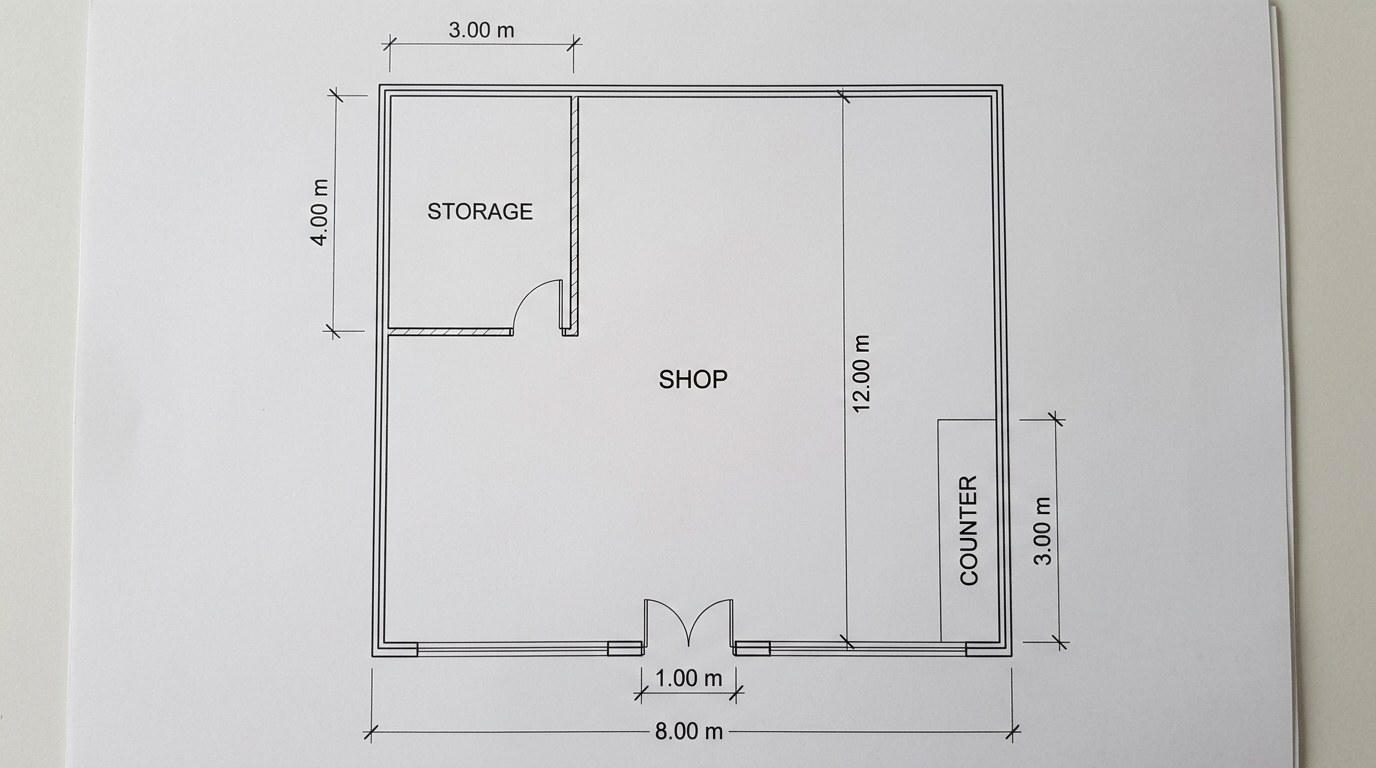

The floor plan says 8.00 m wide and 12.00 m deep, and is drawn wider than it is deep. Every label is spelled correctly. The ruler counts 14, 15, 15, 16 and later 22, 22, and the stem we asked to be 20 centimetres ends past 23. The model writes numbers well and has no sense of what they measure. Plans and size charts belong in a drawing tool.
A clean architect's floor plan printed in black line on white paper, photographed straight-on. It shows one rectangular shop, 8.00 m wide and 12.00 m deep, drawn to scale. A door 1.00 m wide sits in the centre of the front wall at the bottom. A storage room 3.00 m wide and 4.00 m deep occupies the back-left corner. A counter 3.00 m long stands along the right wall. Every one of these dimensions is written on a dimension line beside the part it measures, and the drawn lengths are in proportion to the numbers. Labels: "SHOP", "STORAGE", "COUNTER". No other text.
Still life photograph, shot from directly overhead. A new steel ruler marked in centimetres from 0 to 30, with evenly spaced millimetre lines and every number from 0 to 30 printed once in the correct order, lies horizontally across a pale oak table. Directly above it and parallel to it lies one green tulip stem with its orange flower, cut to a length of exactly 20 centimetres, its cut end level with the 0 mark and the tip of the flower level with the 20 mark. Soft daylight from the left, short shadows; natural colour. Sony A7R V with 50mm lens at f/8.
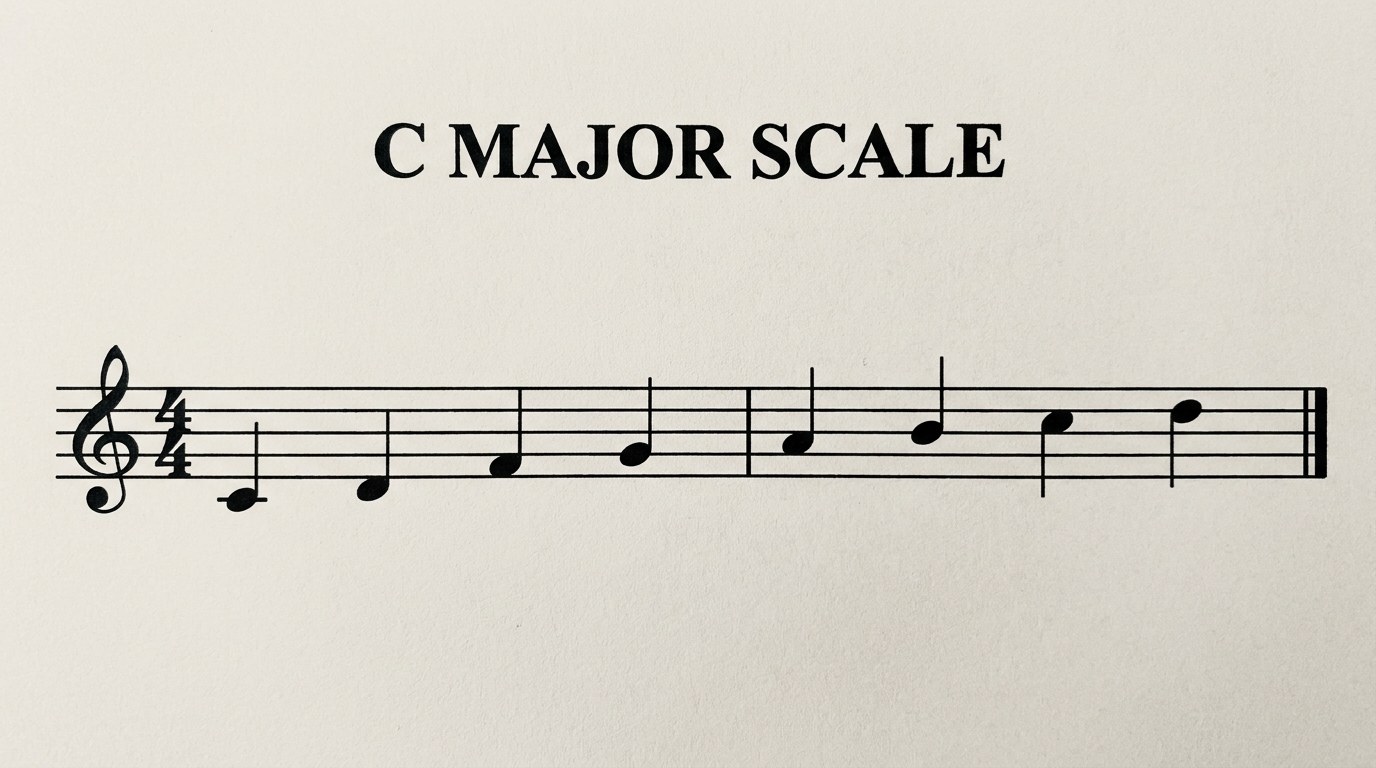
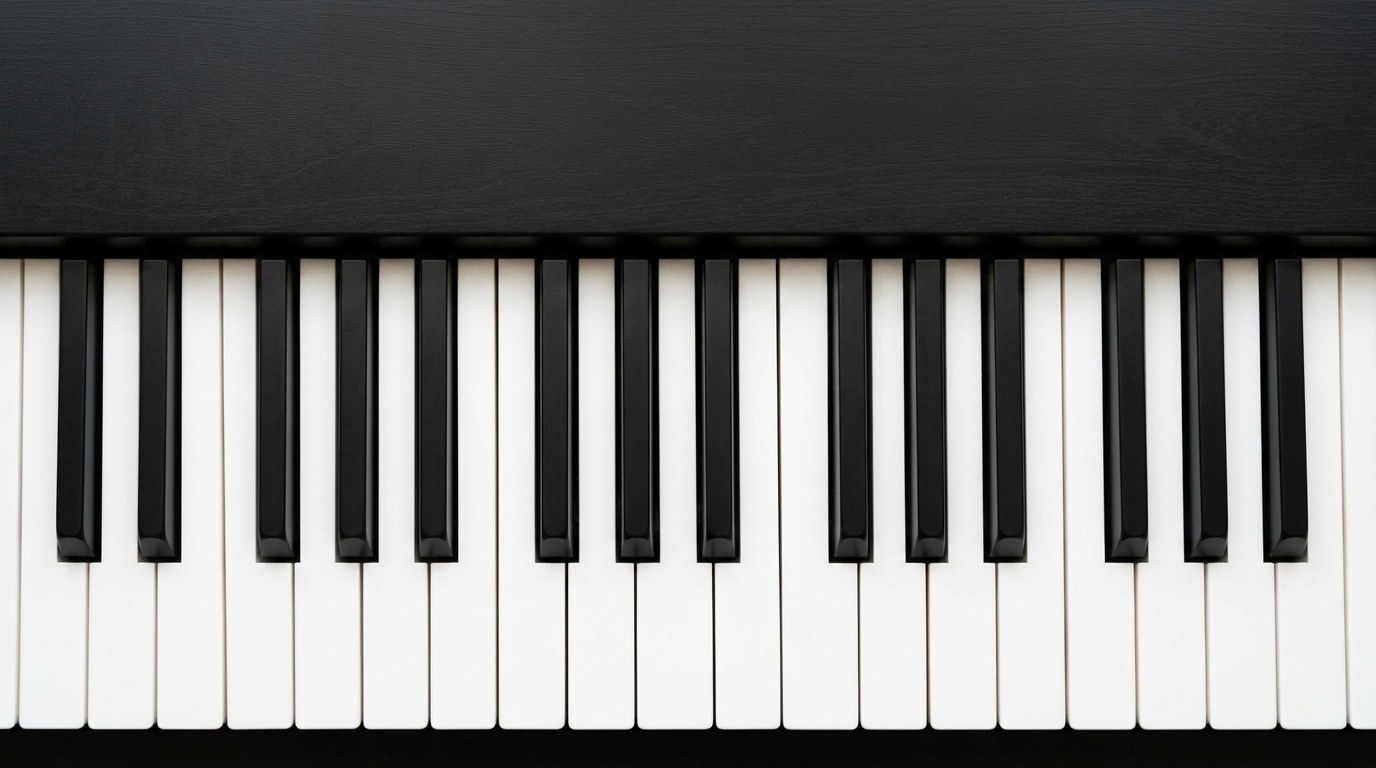
The scale skips E and ends on D. The keyboard starts with a group of two black keys and then gives up on the pattern: three, three, three, three. Both look right to anyone who does not play. If you cannot check a picture yourself, ask someone who can.
A page of printed sheet music on white paper, photographed straight-on. Title at the top: "C MAJOR SCALE". One single staff with a treble clef and a 4/4 time signature, showing the C major scale ascending one octave from middle C to the C above: eight quarter notes, C D E F G A B C, four in the first bar and four in the second bar, each note on its correct line or space, with a ledger line through middle C and a final double bar line. No other notes and no other text.
Still life photograph, shot from directly overhead. Two full octaves of a piano keyboard, from one C to the C two octaves above, filling the frame from left to right: white keys in an even row, black keys in their correct repeating groups of two and three. The keys are new and clean, the wood above them matte black. Soft daylight from a window above the frame, even light; natural colour. Sony A7R V with 50mm lens at f/8.
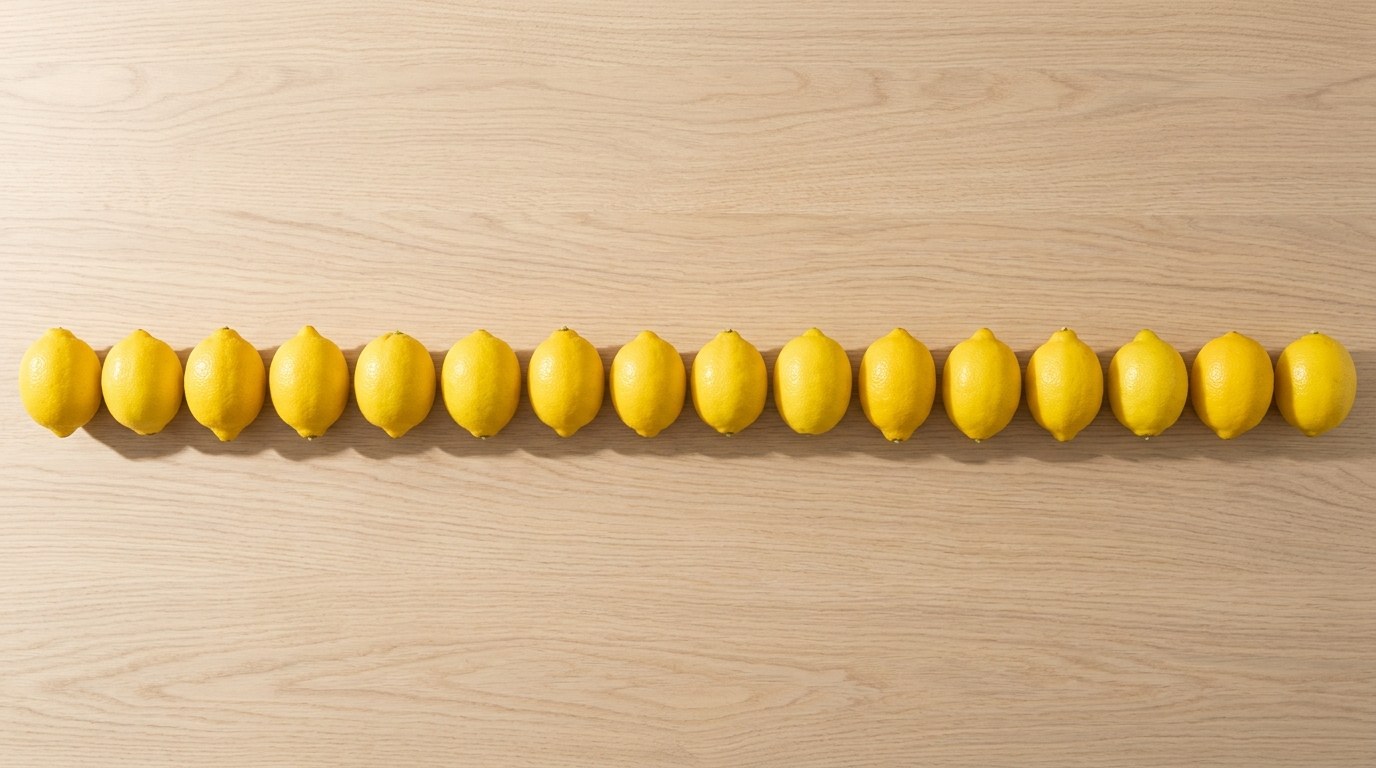
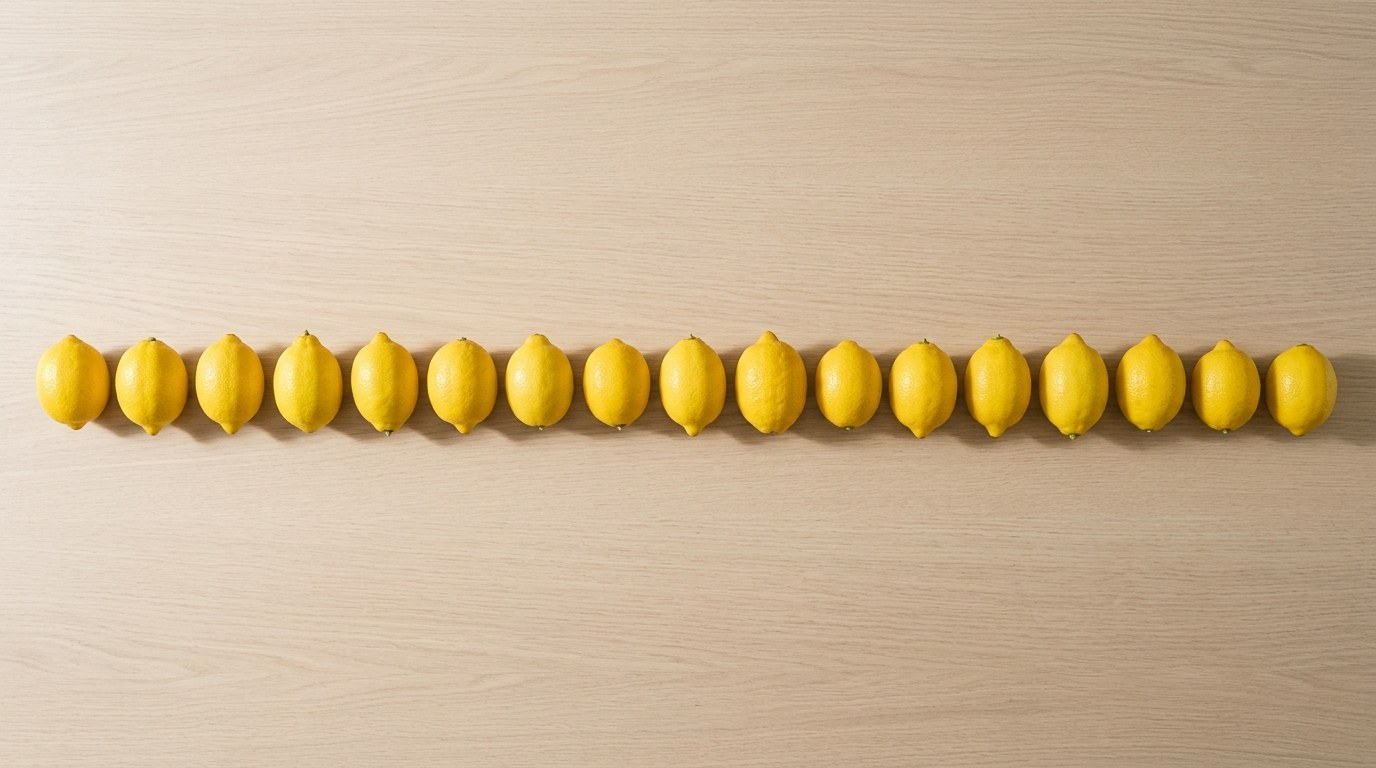
We asked for seventeen lemons. One image has seventeen, the other sixteen. Twelve marbles in three colours went the same way: one image exact, one with a thirteenth marble. Small counts are safe now. Above a dozen, count them.
Food photograph, shot from directly overhead. Exactly seventeen lemons laid in one single straight row from the left edge to the right edge of a pale oak table, evenly spaced, none stacked, nothing else on the table. Late-morning sun from a window on the left, each lemon throwing a short clean shadow to the right; natural colour. Everything clean and new. Nikon D850 with 50mm lens at f/8.
Still life photograph, shot from directly overhead. Exactly twelve glass marbles lie loosely spaced on a pale oak table, none touching: exactly three red, exactly four blue and exactly five green. Nothing else on the table. Late-morning sun from a window on the left, each marble throwing a short clean shadow; natural colour. Nikon D850 with 50mm lens at f/8.
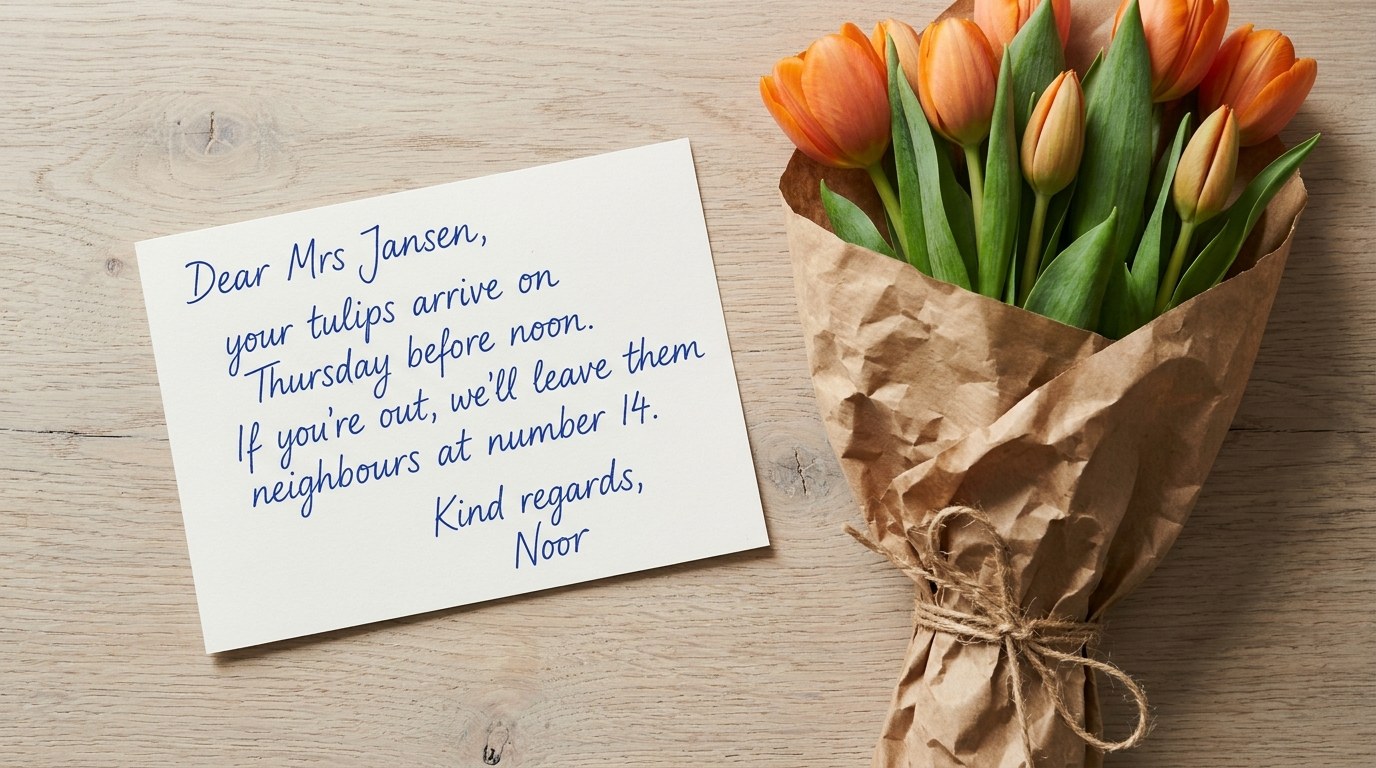
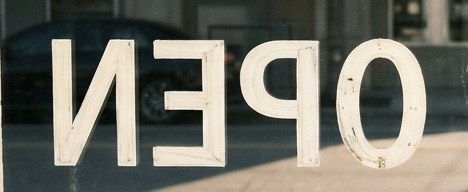
The card should say "we'll leave them with the neighbours". It says "we'll leave them neighbours". The handwriting is so natural that the eye fills in the gap. On the door, seen from inside, the E and the P are reversed as they should be and the N is left as it was. In the chess picture every piece is in place on a board turned a quarter, with a light square in the left corner.
Still life photograph, shot from directly overhead. A white card lies on a pale oak counter beside a bunch of orange tulips wrapped in plain brown paper. On the card, handwritten in blue ballpoint in a quick, joined, slightly slanted hand: "Dear Mrs Jansen, your tulips arrive on Thursday before noon. If you're out, we'll leave them with the neighbours at number 14. Kind regards, Noor". The card fills about a third of the frame and every word is readable. Soft daylight from the left; natural colour. Sony A7R V with 50mm lens at f/8.
Interior photograph taken from inside a contemporary shop, looking out through its plate-glass door at a sunny street. The word "OPEN" is painted in white capitals on the outside of the glass for people on the street to read, so from inside, where the camera is, the word appears mirrored, back to front, with its letters reversed. A pale terrazzo floor in the foreground, a cyclist passing outside, out of focus. Clear morning sun from the right, hard shadows on the pavement; natural colour. Fujifilm X-T5 with 23mm f/2 at f/8.
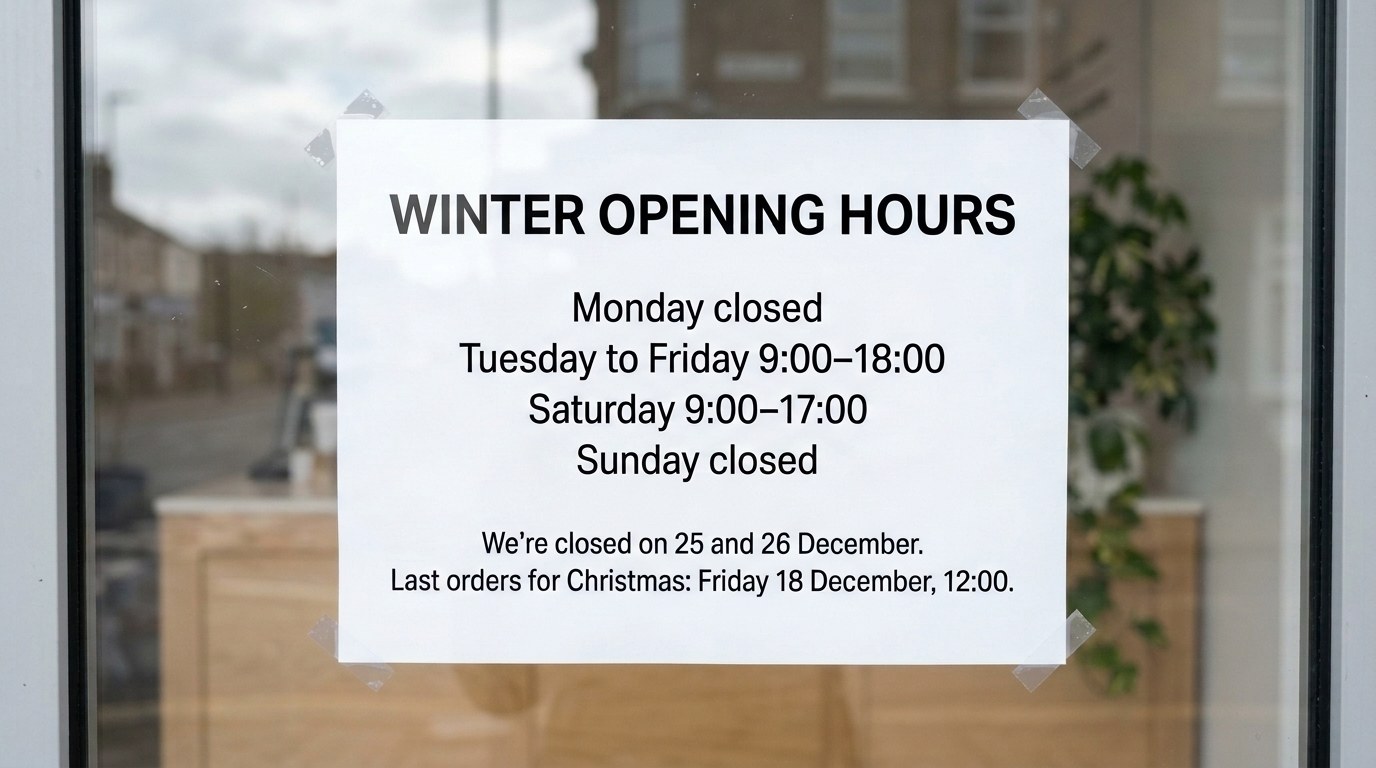
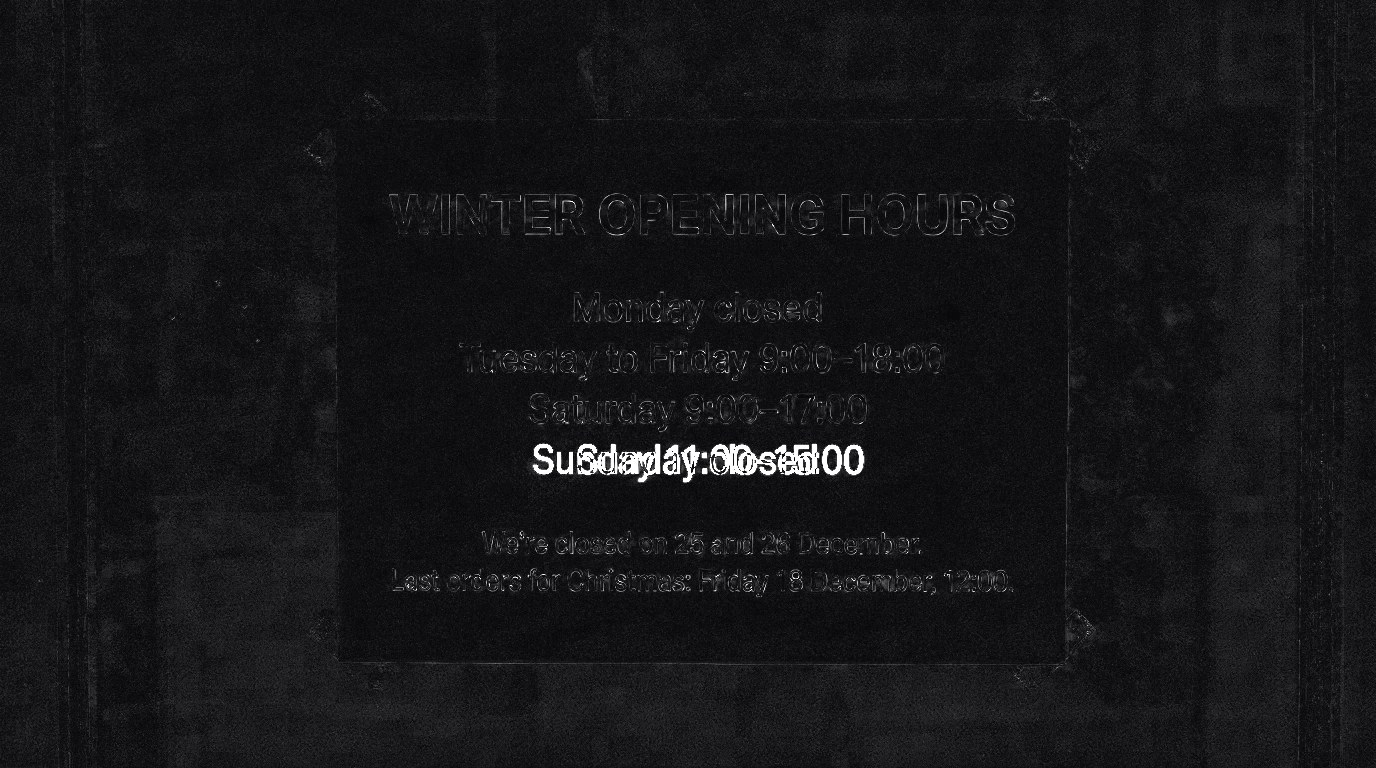
The most ordinary request a shop makes: change one line on the sign and leave the rest alone. Published tests this autumn found no model that passes it cleanly. Ours passed to the eye. The second picture is the difference between before and after: the Sunday line glows, and every other letter shows faintly because the whole image was redrawn a fraction off. That is fine for a window. For a label or a price list, change the text in an editor.
Street photograph. A white A3 poster taped flat inside the plate-glass door of a contemporary shop, photographed straight-on from the pavement outside, looking through the glass, the poster filling most of the frame. The poster reads, in black type, one line under the other: "WINTER OPENING HOURS", "Monday closed", "Tuesday to Friday 9:00–18:00", "Saturday 9:00–17:00", "Sunday 11:00–15:00", "We're closed on 25 and 26 December.", "Last orders for Christmas: Friday 18 December, 12:00." The heading is larger than the other lines. No other text in the frame. Behind the glass, a pale oak counter and a green plant, out of focus. Bright overcast light with a faint reflection of the street in the glass; natural colour. Fujifilm X-T5 with 33mm f/1.4 at f/5.6.
Change only the line "Sunday 11:00–15:00" to "Sunday closed". Keep every other line of text, the poster, the tape, the glass, the reflections, the lighting and the framing exactly as they are.
| Request | Try 1 | Try 2 |
|---|---|---|
| A pavement sign in Dutch, Danish and Swedish | yes | yes |
| Exactly seventeen lemons in a row | 16 | yes |
| A pen in her left hand | right hand | right hand |
| Two clocks: 9:05 and 4:40 | yes | yes |
| A calendar page for November 2026 | yes | yes |
| A bike drivetrain, right side | yes | left side |
| Hands tying a shoelace | yes | yes |
| A chessboard set up to start | board turned | board turned |
| Two octaves of piano keys | yes | black keys wrong |
| A mirror with two objects | yes | yes |
| A zebra without stripes | yes | yes |
| A bar chart of 89, 54, 31 and 9 | yes | yes |
| A 30 cm ruler and a 20 cm stem | stem too long | numbers repeat |
| Opening hours, seven lines | yes | yes |
| The start of a 10K, sixty runners | yes | yes |
| A glass full to the brim | yes | yes |
| A QR code that opens our site | will not scan | will not scan |
| A laptop keyboard | yes | yes |
| A map of the Netherlands, five cities | yes | yes |
| A floor plan, 8 by 12 metres | out of scale | out of scale |
| The C major scale | wrong notes | wrong notes |
| Three red, four blue, five green marbles | yes | 13 marbles |
| Two hands, fingers interlaced | yes | yes |
| OPEN, seen from inside the shop | N not reversed | N not reversed |
| A jar label in small print | yes | yes |
| A handwritten card, 25 words | two words missing | yes |
| A cup in his left hand | right hand | right hand |
Fourteen done, thirteen open. In the 10K picture the runners' bib numbers are scribble; we did not ask for numbers and let it pass. Two tries on one model is a snapshot, so run the prompts on the model you use. We will be back in November 2027 with the same list.
№ 14 · Design & AI tools reviewAll stories
№ 12Design & AI tools review
One ordinary prompt, run through fourteen AI image models released between October 2024 and October 2026. Read the price card to see what two years changed.
№ 08Design & AI tools review
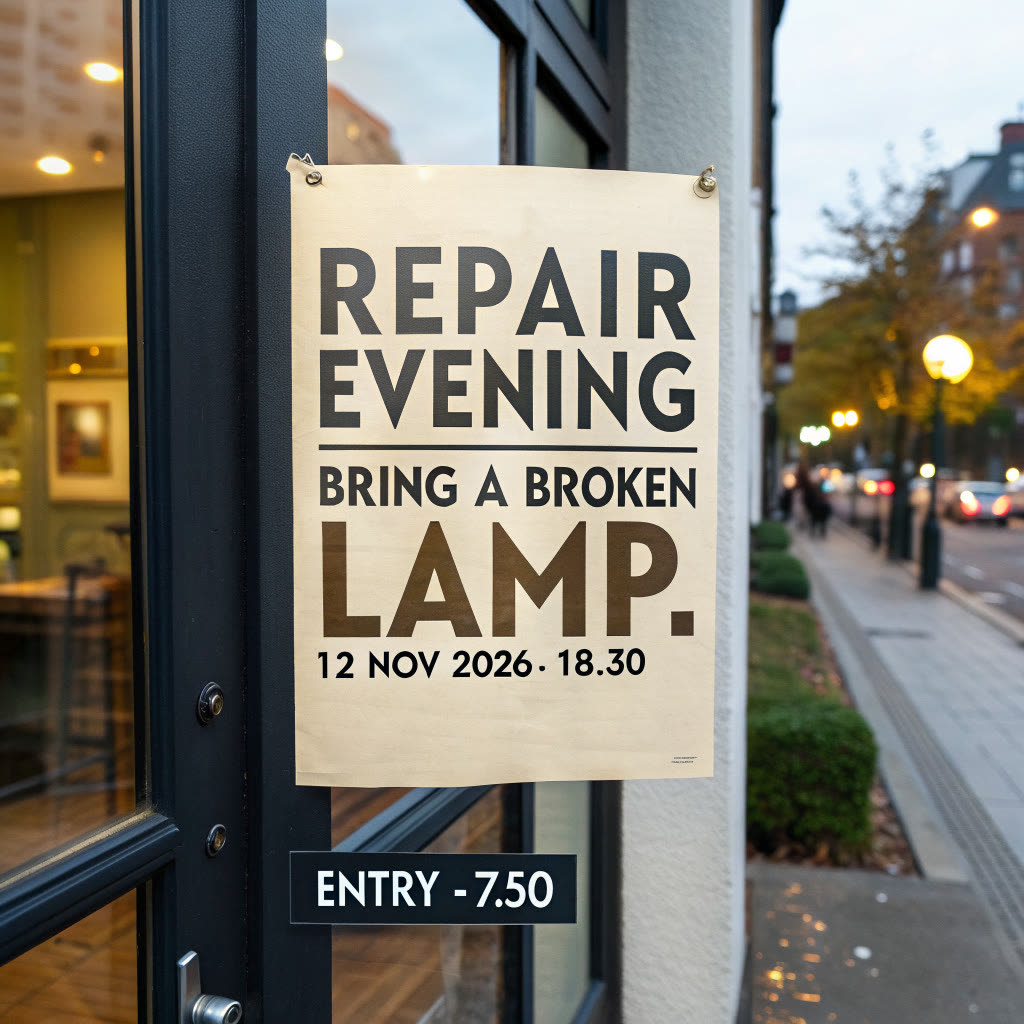
The best AI image generator for text has to get the small print right. We compare jar labels and shop posters, one letter at a time.
№ 15Industry
A forecast in seven pictures: one week of image making in a small bike shop in 2027, built only from tools that work today and rules that already have a date.