№ 13Industry
2026 in ten pictures: what a running club can ask for now
2026 in AI image making, told in ten pictures of one small running club: what you can ask for now, what it costs, and where a person is still needed.
№ 15IndustryPhoto essay
A forecast in seven pictures: one week of image making in a small bike shop in 2027, built only from tools that work today and rules that already have a date.
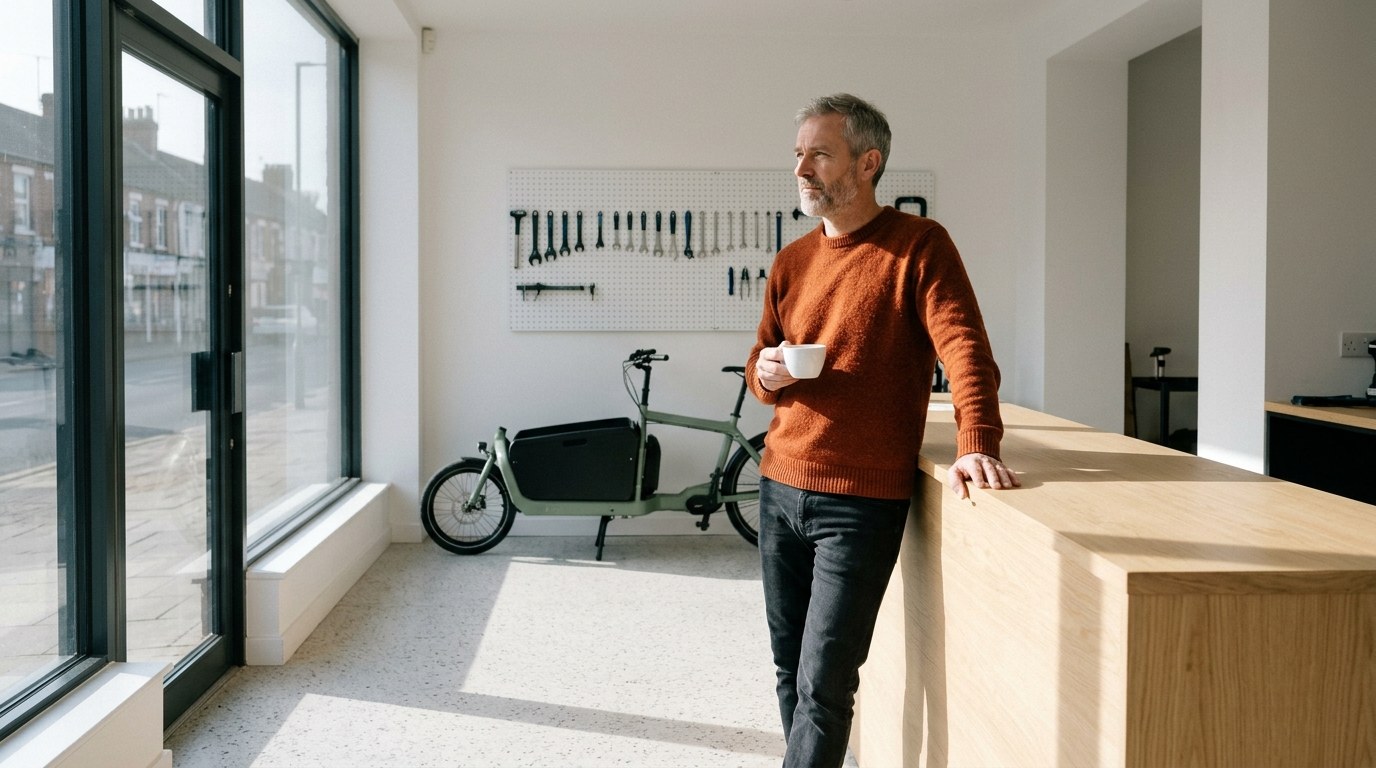
The shop is invented, and so is its owner, whom we will call Jeroen. He sells cargo bikes and employs two people.
He is in good company. In 2025 one in ten EU companies with ten or more staff already used AI to make pictures, video or sound, Eurostat reports, and among the smallest Dutch firms marketing is the most common use.
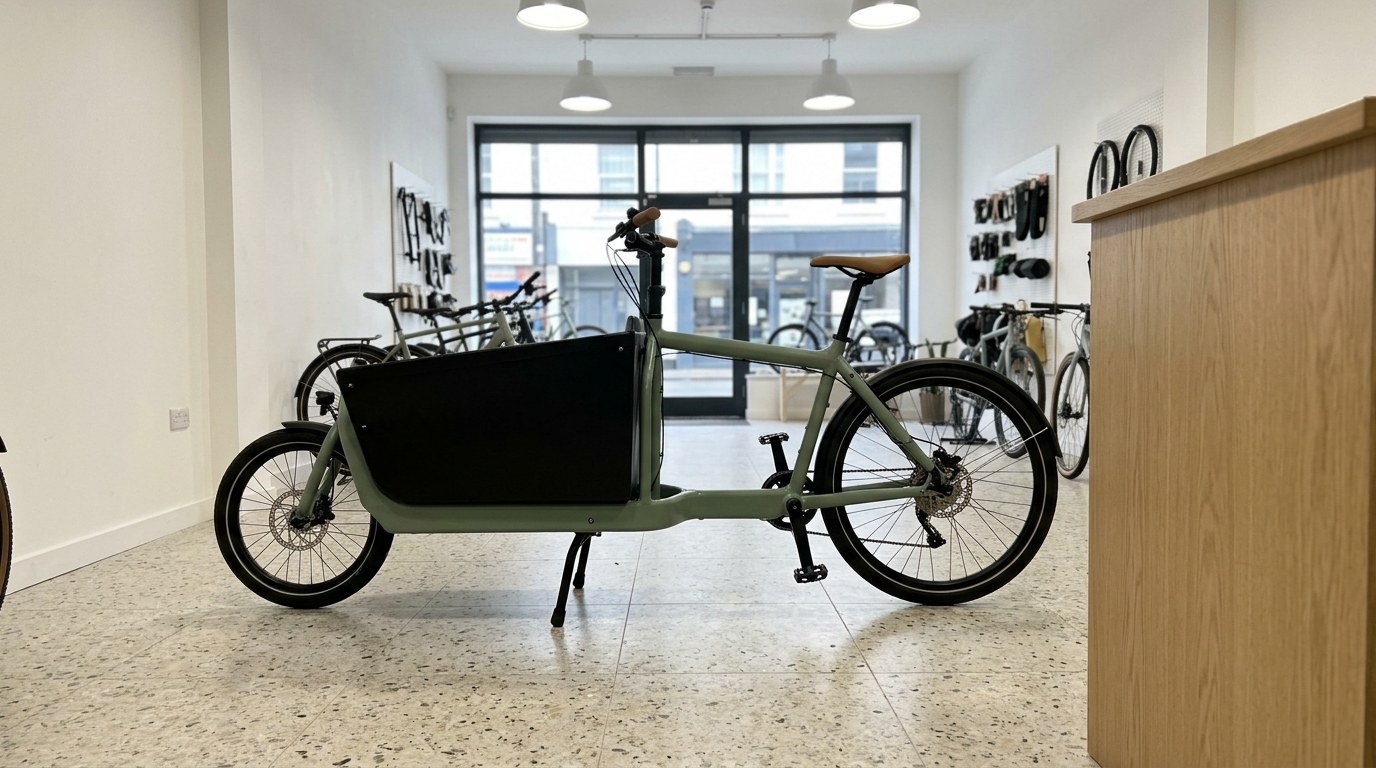
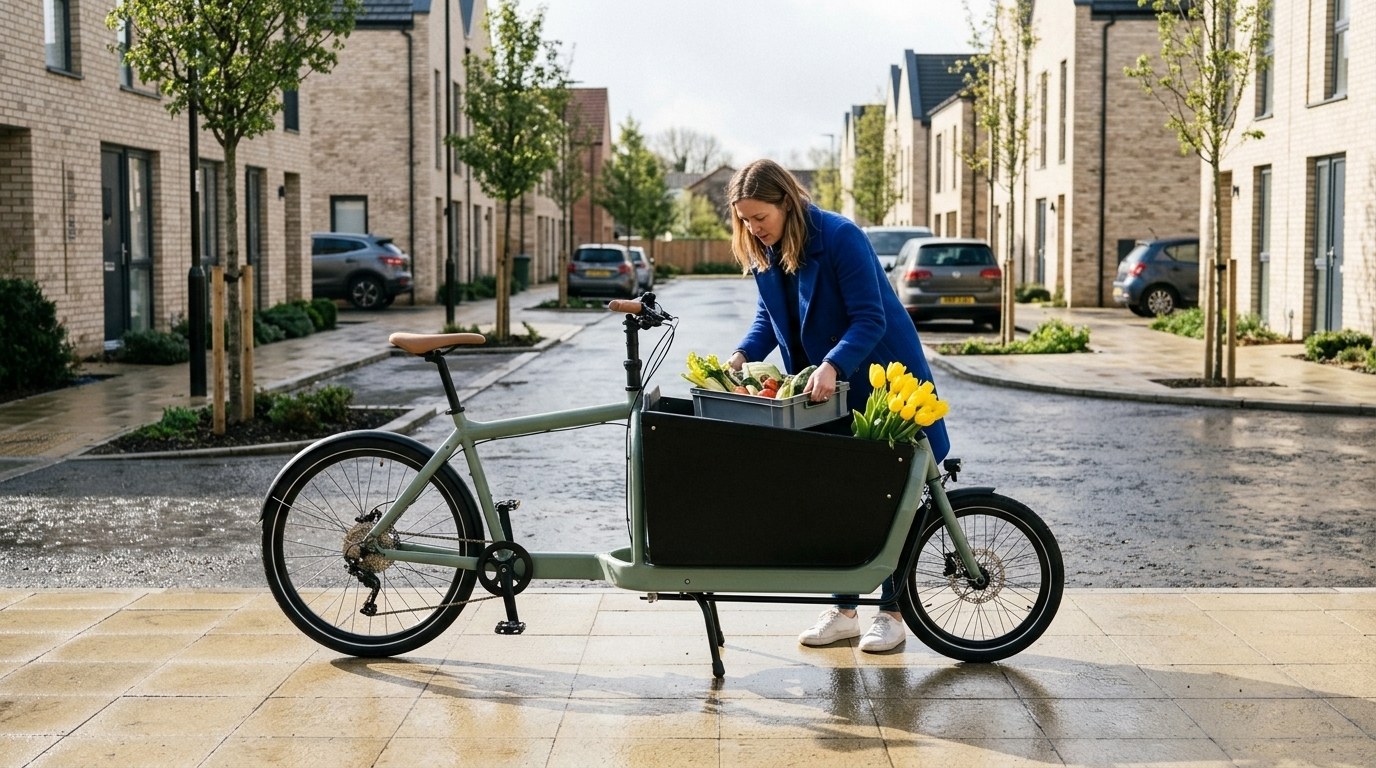
A new model arrives in the shop. Jeroen takes one honest, slightly crooked photo on his phone and asks for the same bike on a street after rain, with someone loading the shopping. Placing a real product from a single reference photo is one of the things that started working this year.
Before he posts it he compares the picture with the bike: frame, box, saddle, tyres. A customer who cycles over to see that bike should find that bike.
Street photograph showing exactly the same cargo bike as in the reference image: the same matte sage-green frame, the same black front cargo box, tan saddle and black tyres, with nothing added to it. Full shot of the bike parked on its kickstand on a quiet contemporary residential street with pale brick houses and young trees, while a 35-year-old woman with dark blonde hair, in a cobalt-blue wool coat and white trainers, lowers a grey tray of vegetables and a bunch of yellow tulips into the cargo box, eyes on the box. Frame the bike side-on with the woman at its front, both left of centre, wet pale paving in the foreground. Clear sun just after rain from the right, crisp shadows and bright reflections on the paving; natural colour, the tulips the brightest thing. She does not notice the camera. No lettering or logos anywhere. Everything clean and well kept. Nikon Z8 with 35mm f/1.8 at f/8, 1/500 second.
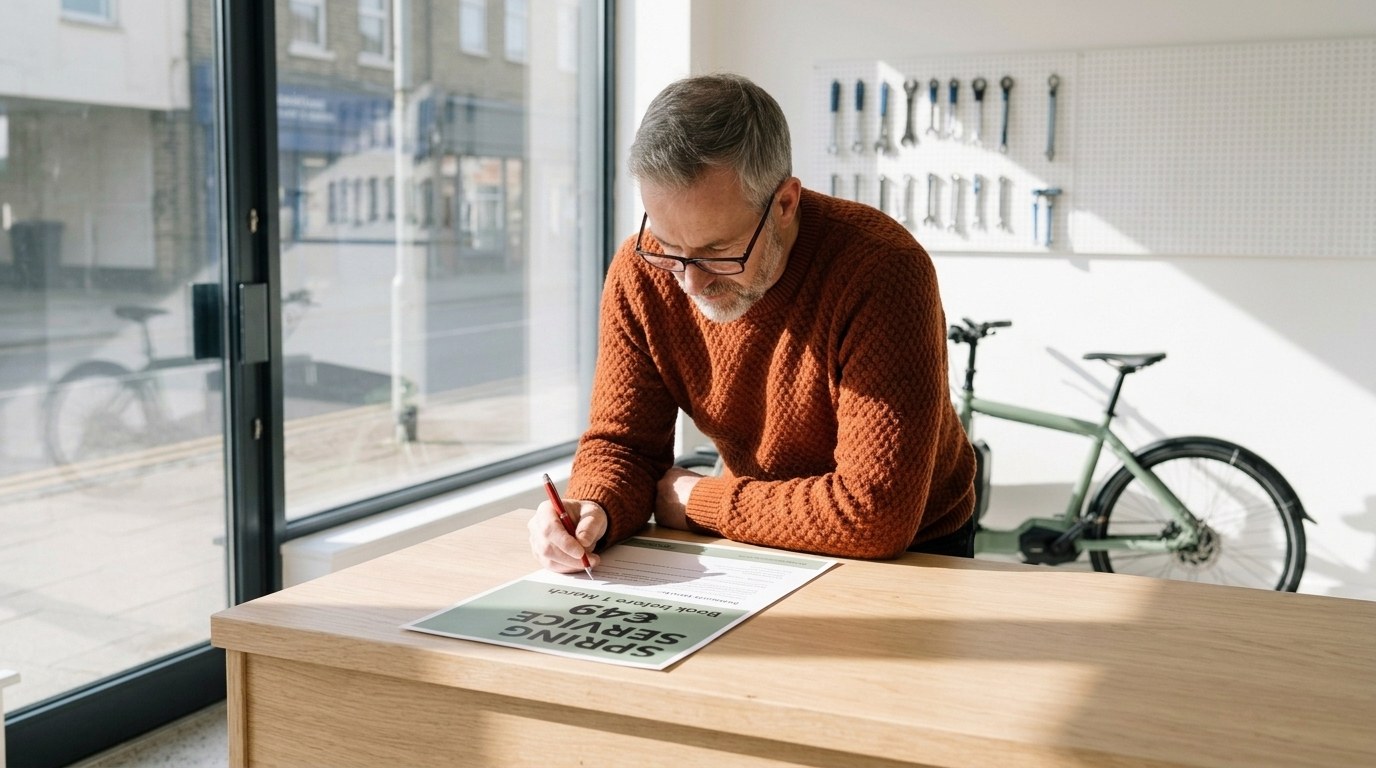
The poster for the spring service takes one prompt. The proofreading takes a red pen. Models spell short lines correctly most of the time, and "most of the time" is the problem with a price. This month the same model that wrote this poster also wrote "BONCHES" on a card. He reads the print aloud once.
Documentary photograph of the same man as in the reference image, with the same face, short grey beard and rust-orange wool jumper, in the same bright bike shop with white walls, pale terrazzo floor and plate-glass shopfront. Medium shot of him leaning over the pale oak counter, proofreading a printed A3 poster that lies flat on it, a red pen in his hand touching one line, reading glasses on, eyes on the poster. The poster has a sage-green band across the top and black type on white reading "SPRING SERVICE €49" and, smaller, "Book before 1 March". No other text in the frame. Frame him from the customer side of the counter, slightly from above, with the sage-green cargo bike and the white wall out of focus behind him. Clear morning sun through the shopfront on the left lays a sharp bright patch across the counter and the poster; clean natural colour, the jumper the brightest thing. He does not notice the camera. Everything new, minimal and well kept. Canon EOS R5 with RF 35mm f/1.8 at f/4.
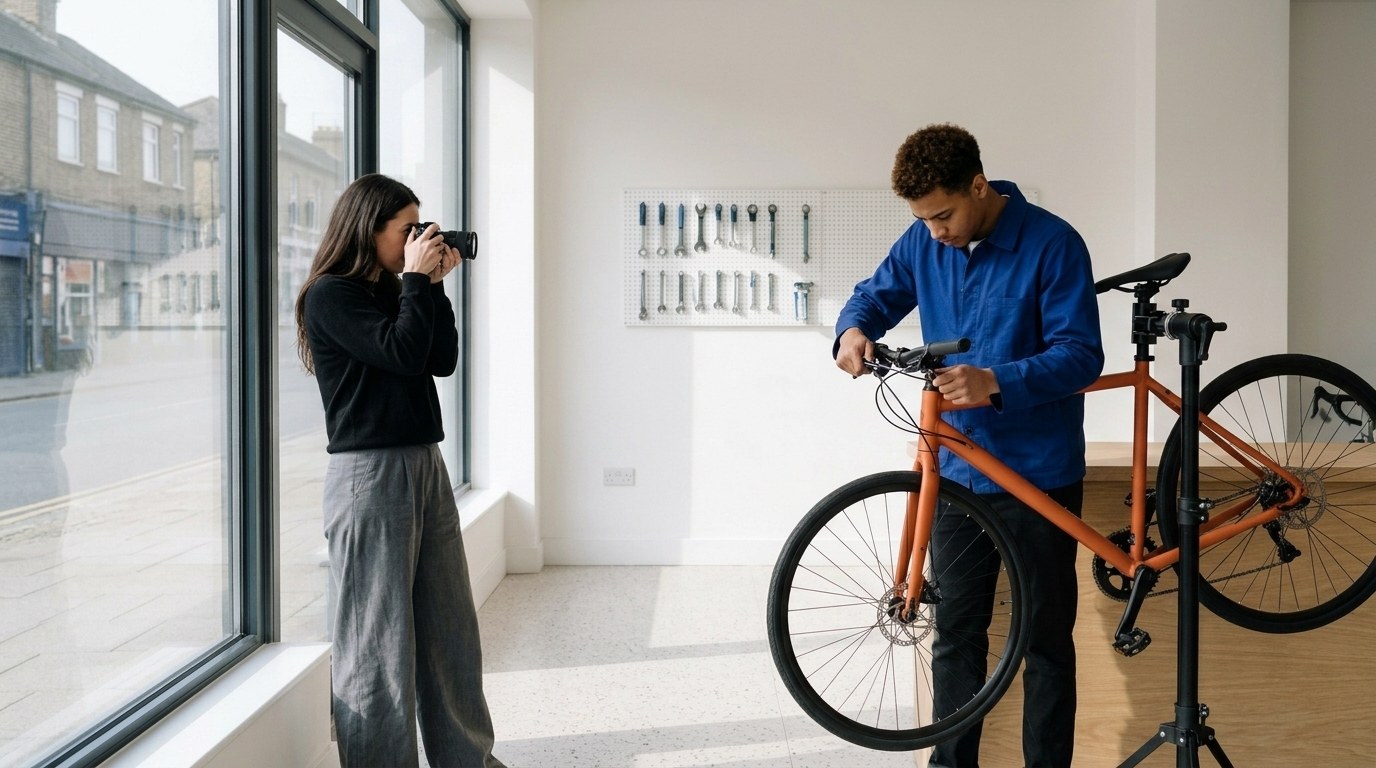
The pictures of his staff he does not generate. Customers will meet Sami at the workshop stand, and a made-up mechanic with a nicer smile would be a small lie on the front page. So once a year a local photographer comes for two hours and a proper fee.
That is also where his money does some good. In a UK survey early in 2026, 58% of photographers said they had lost commissions to generated images. Pictures of real people are the ones a shop like this should still commission.
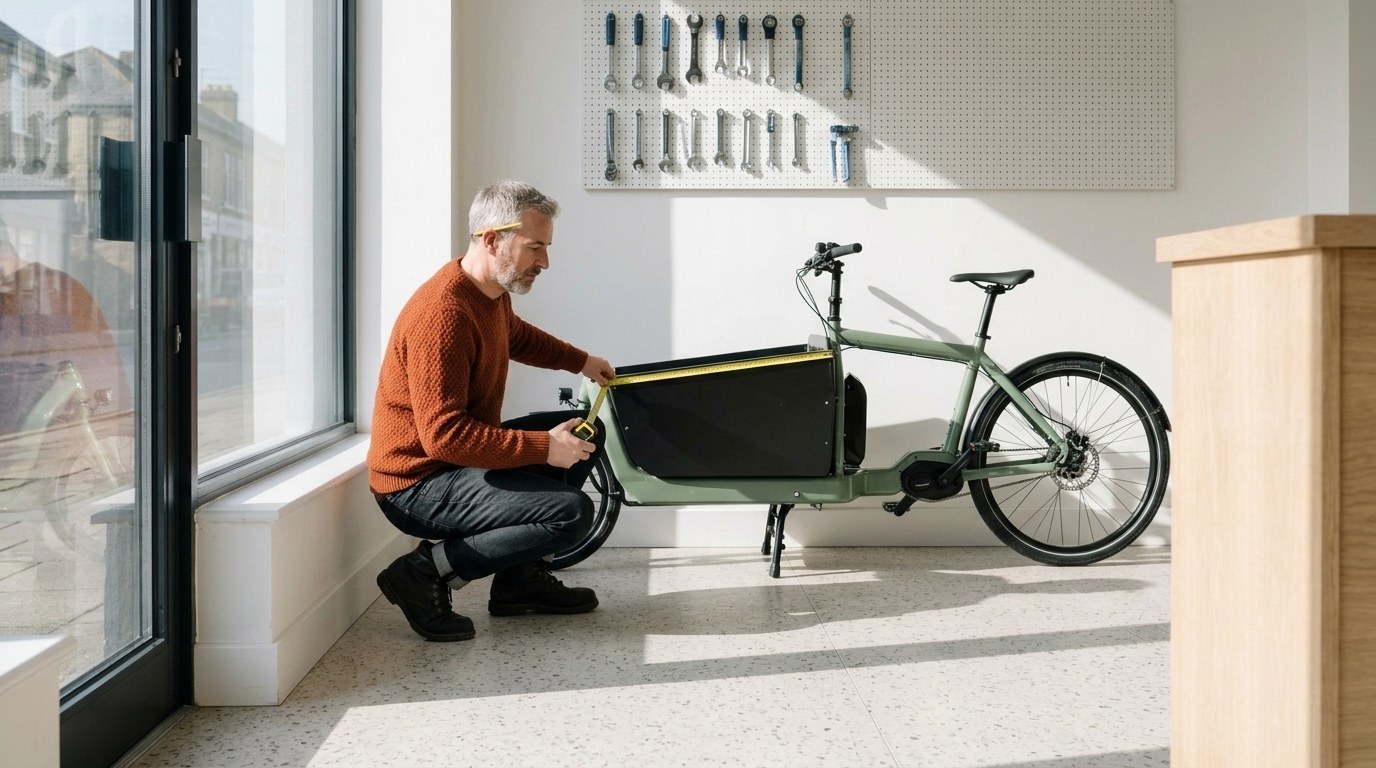
Parents ask whether two children and a crate fit in the box. The size chart for the website he draws himself, from numbers he has measured. Image models write figures neatly and draw them out of scale: this month we got a floor plan labelled 8 by 12 metres that was wider than it was deep. The same goes for the QR code on the poster, which he makes with a QR tool and scans with his own phone.
Documentary photograph of the same man as in the reference image, with the same face, short grey beard and rust-orange wool jumper, in the same bright bike shop with white walls, pale terrazzo floor and plate-glass shopfront. Full shot of him crouching beside the matte sage-green long-john cargo bike with its black front cargo box, measuring the length of the box with a yellow steel tape measure pulled out along its top edge, a pencil behind his ear, eyes on the tape. Frame him side-on from across the shop, the whole bike in frame and plenty of floor around it. Low late-afternoon sun through the shopfront throws long warm window shadows across the terrazzo and up the white wall; clean natural colour, the yellow tape the brightest thing. He does not notice the camera. No lettering or logos anywhere. Everything new, minimal and well kept. Sony A7 IV with 35mm f/1.8 at f/5.6.
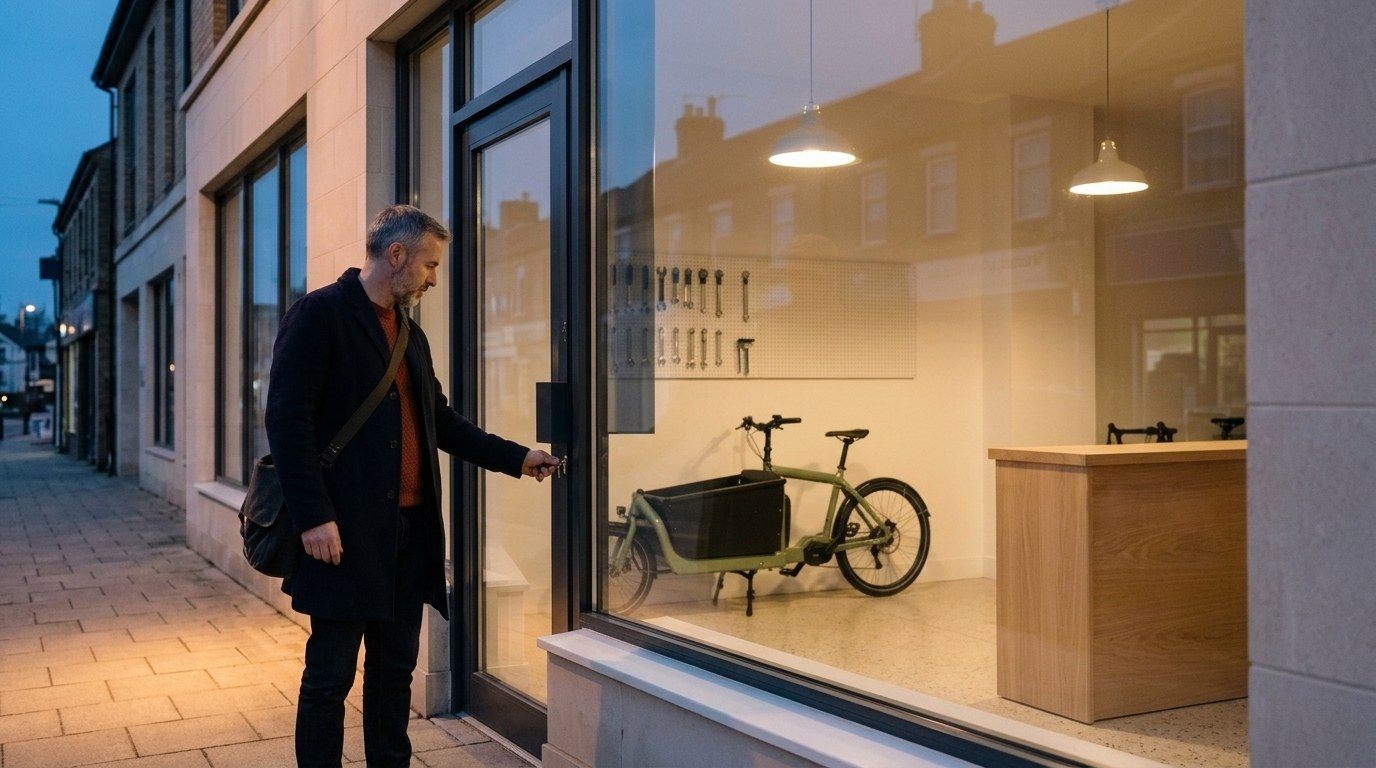
By 2027 the marking takes care of itself. Under the EU AI Act the makers of image tools must build a machine-readable mark into what they produce; for tools already on the market that duty starts on 2 December 2026. Jeroen does nothing for it.
What he adds himself is one line under the street picture: "Scene made with AI, bike photographed in our shop." The law does not ask an ordinary shop for that. His customers might, and Swedish creators' organisations recommend exactly this kind of plain label. Then he locks up.
Street photograph of the same man as in the reference image, with the same face and short grey beard, now wearing a navy wool coat over his rust-orange jumper. Full shot of him locking the glass door of his bike shop from the pavement outside at dusk, a key in the lock, a canvas bag over his shoulder, eyes on the lock. The shop is the ground floor of a new building with a smooth pale stone facade, slim dark steel window frames and one large sheet of plate glass. Frame him side-on at the left third from the pavement, the shop window filling the rest of the frame: inside, two white pendant lamps are still lit over the matte sage-green cargo bike, the pale oak counter and the white walls. Clear deep-blue early-evening sky reflected at the top of the glass, warm light from the shop falling on clean pale paving and on his coat; rich natural colour, the lit window the brightest thing. He does not notice the camera. Plain glass without lettering. Everything new and well kept. Fujifilm X-T5 with 23mm f/2 at f/2.8, 1/125 second.
| Day | Job | Who made the picture | Time |
|---|---|---|---|
| Monday | New bike on the street | Model, from his phone photo | 20 min |
| Tuesday | Spring service poster | Model, proofread by hand | 15 min |
| Wednesday | Staff portraits | A photographer | 2 hours |
| Thursday | Size chart, QR code | Jeroen, with a tape measure | 10 min |
| Friday | Publish and label | Nobody | 5 min |
Fifty minutes of his own time and a handful of credits, for work that used to mean an agency or nothing. In 2027 a small shop can look as cared for as a large one, as long as someone still checks the bike, reads the poster and pays the photographer.
Every picture in this story is generated, including the "phone photo" and the photographer. We made them with Google Nano Banana 2.1 in Google Flow on 13 November 2026, using the phone snapshot and the portrait as references for the rest. The times are our estimates from doing the same jobs.
№ 15 · IndustryAll stories
№ 13Industry
2026 in AI image making, told in ten pictures of one small running club: what you can ask for now, what it costs, and where a person is still needed.
№ 14Design & AI tools review
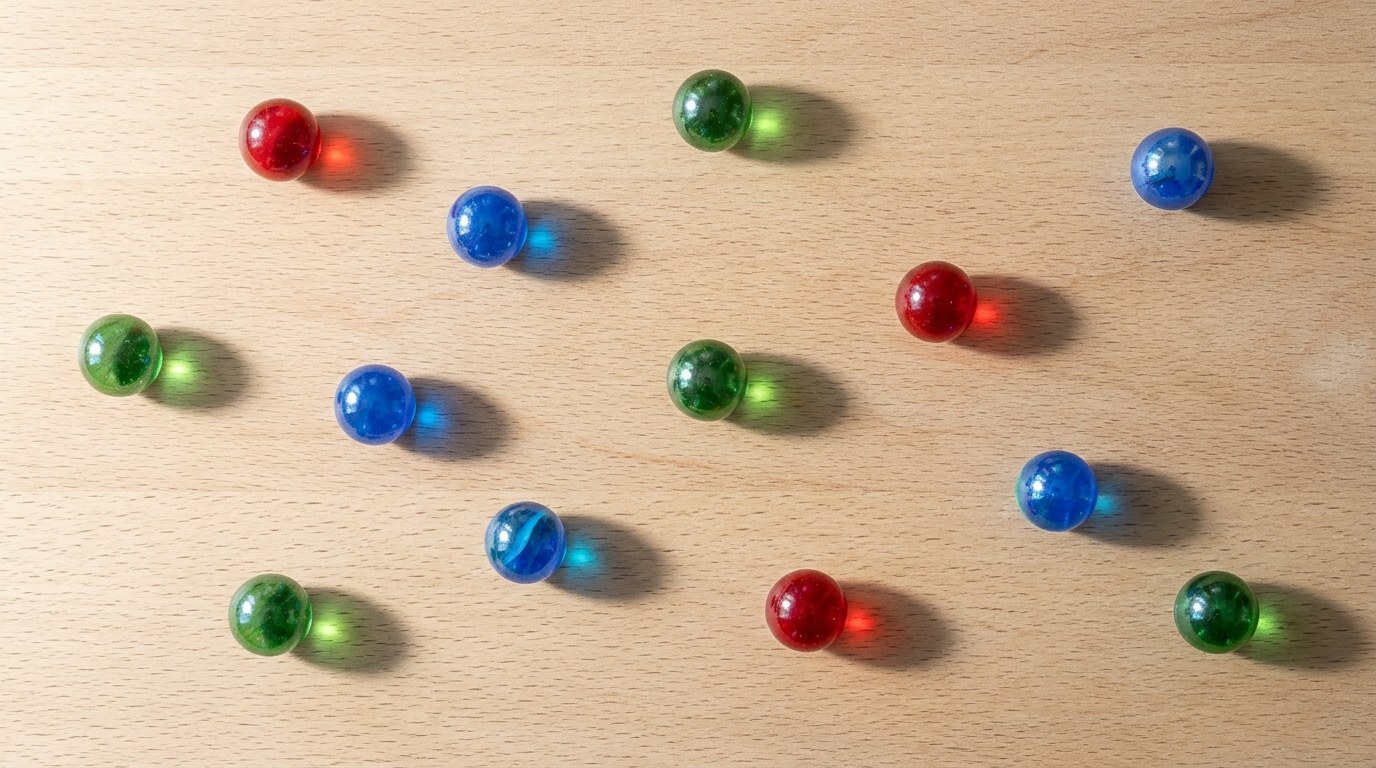
What AI image models still get wrong in November 2026: 27 ordinary requests, two tries each, on a current model. It writes almost anything now. It cannot measure.
№ 12Design & AI tools review
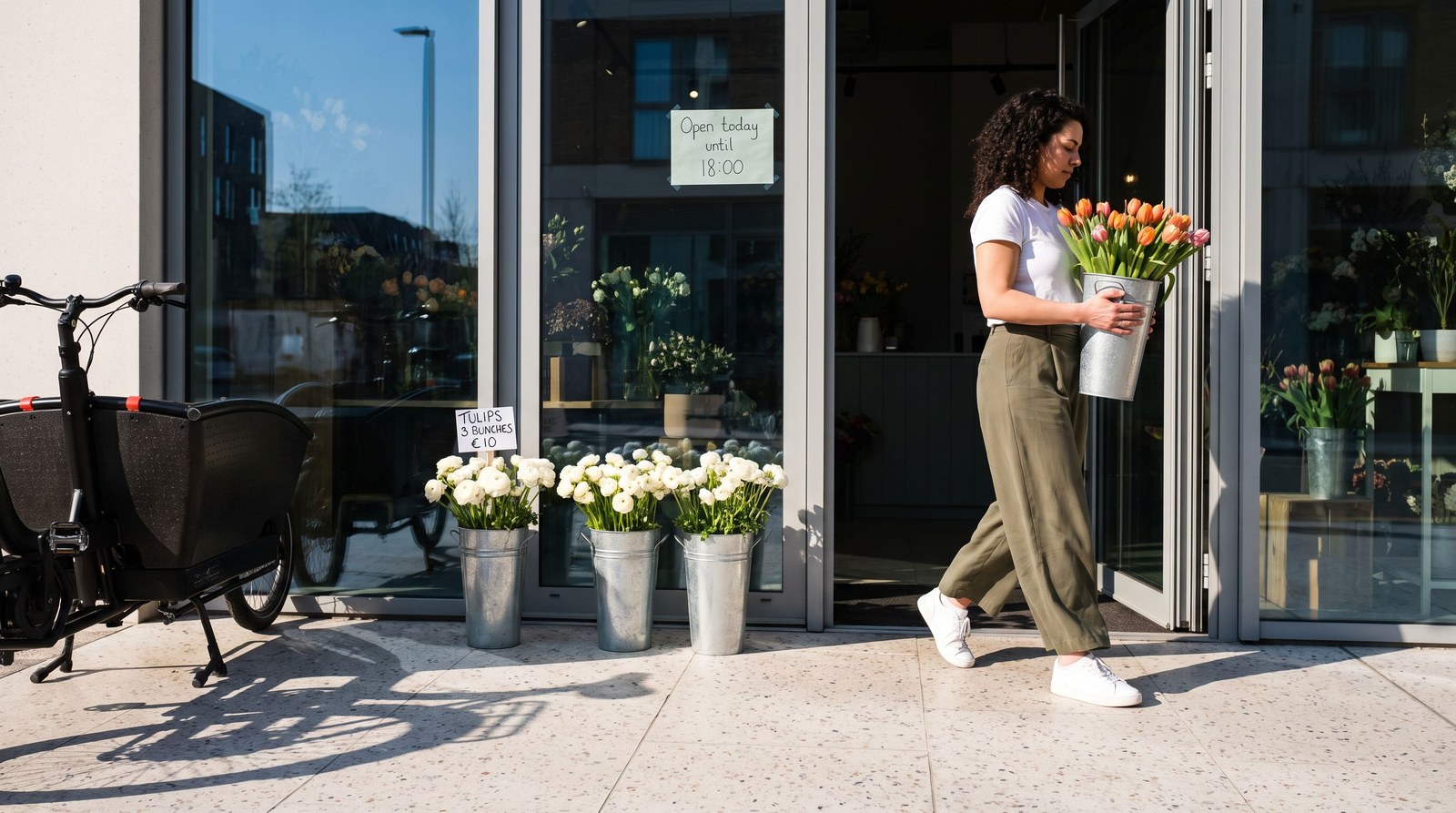
One ordinary prompt, run through fourteen AI image models released between October 2024 and October 2026. Read the price card to see what two years changed.