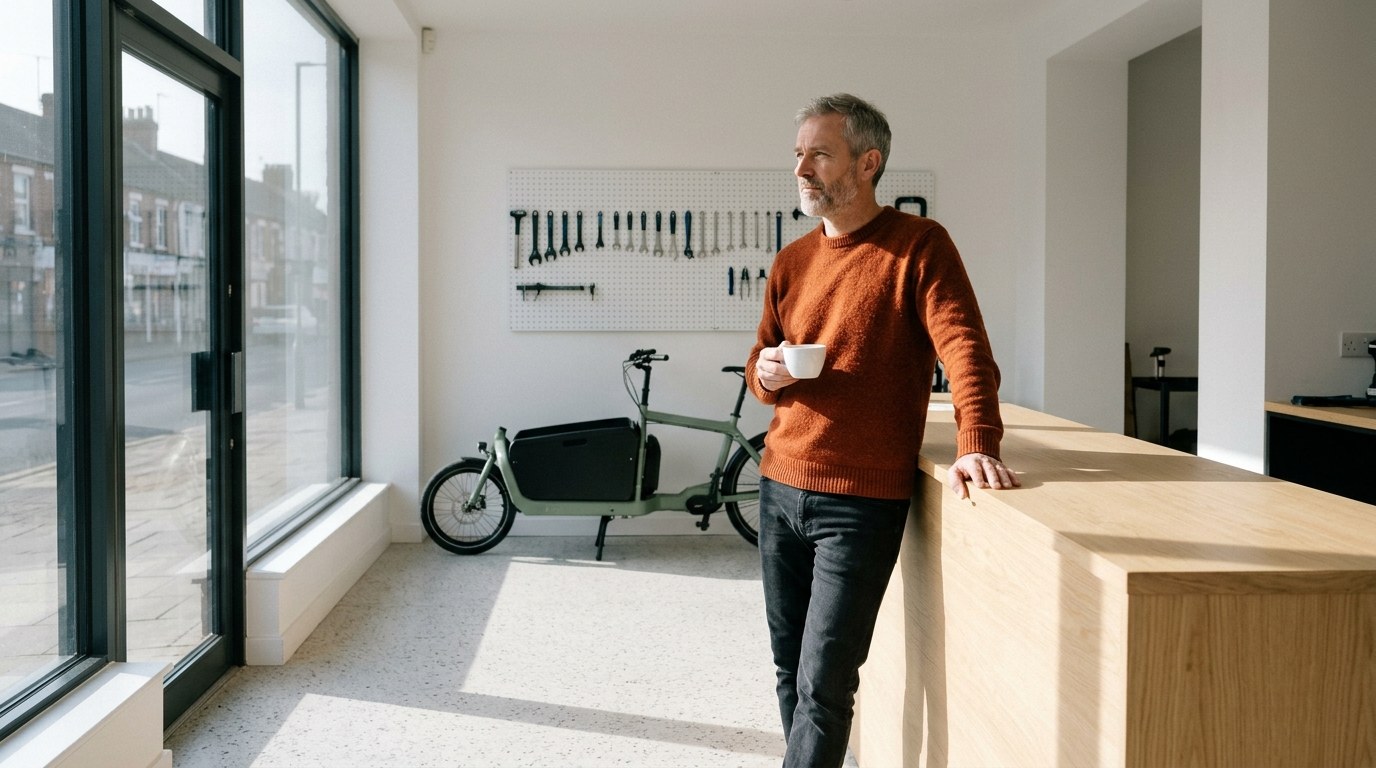
№ 15Industry
A bike shop's week in 2027
A forecast in seven pictures: one week of image making in a small bike shop in 2027, built only from tools that work today and rules that already have a date.
№ 13IndustryPhoto essay
2026 in AI image making, told in ten pictures of one small running club: what you can ask for now, what it costs, and where a person is still needed.
We made every picture this week. Each stands for something that changed this year for people who make images.
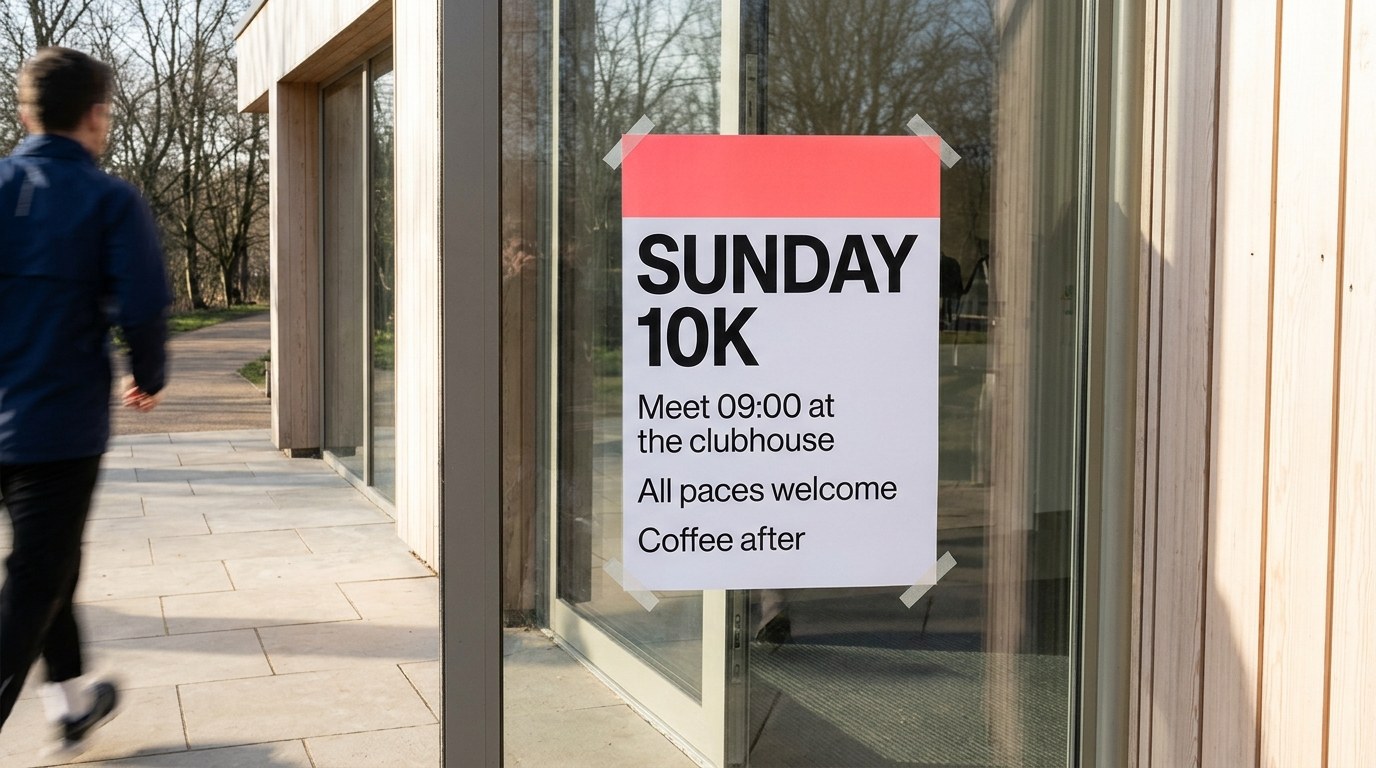
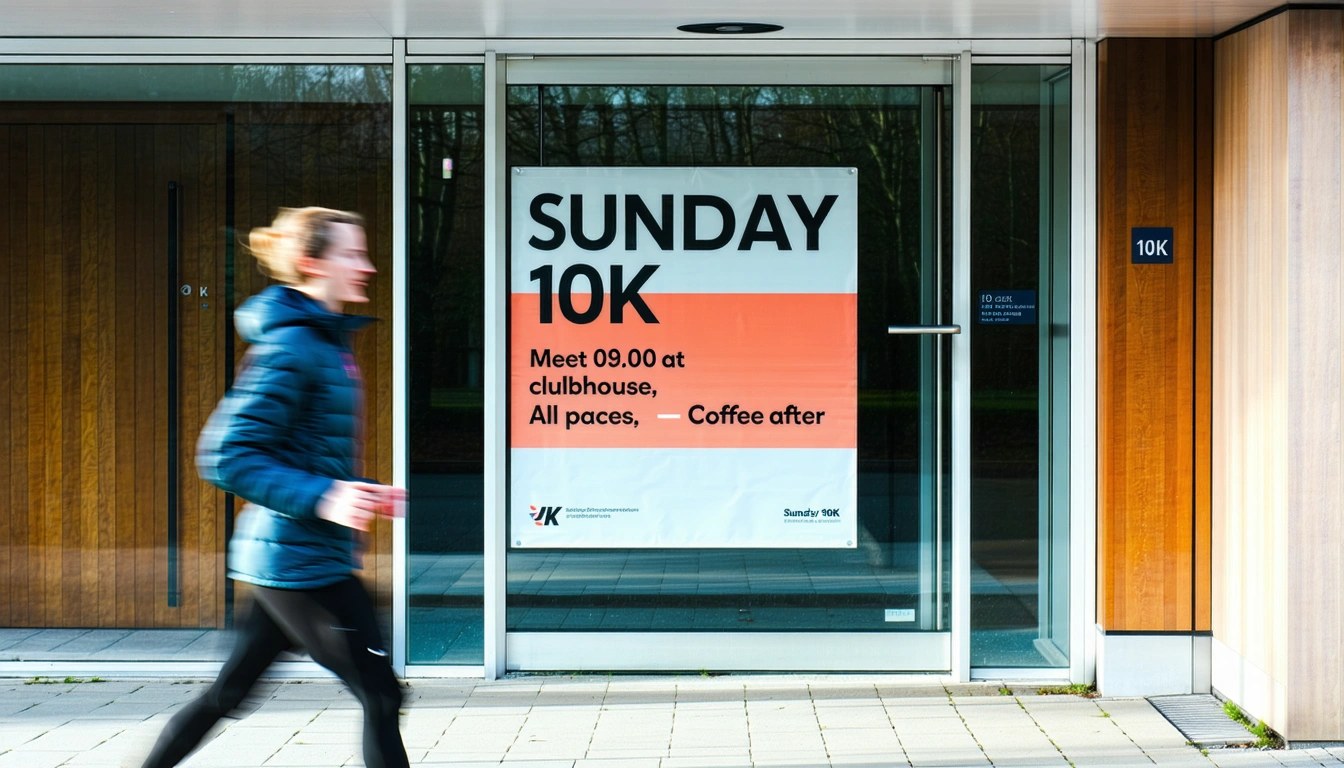
Left, a model from October 2026. Right, the same prompt on a model from October 2024: the headline holds, the small lines are shortened and run together, and stray lettering appears at the foot of the poster and on the wall. Dependable words in pictures arrived this year with Google's Nano Banana 2 in February and OpenAI's GPT-Image 2 in April. The notice and the picture now come in one go. Read every line before you print.
Street photograph. A printed A3 poster taped flat inside the glass door of a contemporary running clubhouse with pale timber cladding, photographed from the path outside, slightly off-centre, the poster filling about half the frame. The poster has a coral-pink band across the top and black type on white, reading, one line under the other: "SUNDAY 10K", "Meet 09:00 at the clubhouse", "All paces welcome", "Coffee after". The first line is much larger than the others. No other text in the frame. A runner in a navy jacket passes on the left edge, out of focus, and a row of bare trees reflects in the glass. Clear cold morning sun from the right, hard shadows on the pale paving; natural colour, the coral band the brightest thing. Everything clean and new. Fujifilm X-T5 with 33mm f/1.4 at f/5.6.
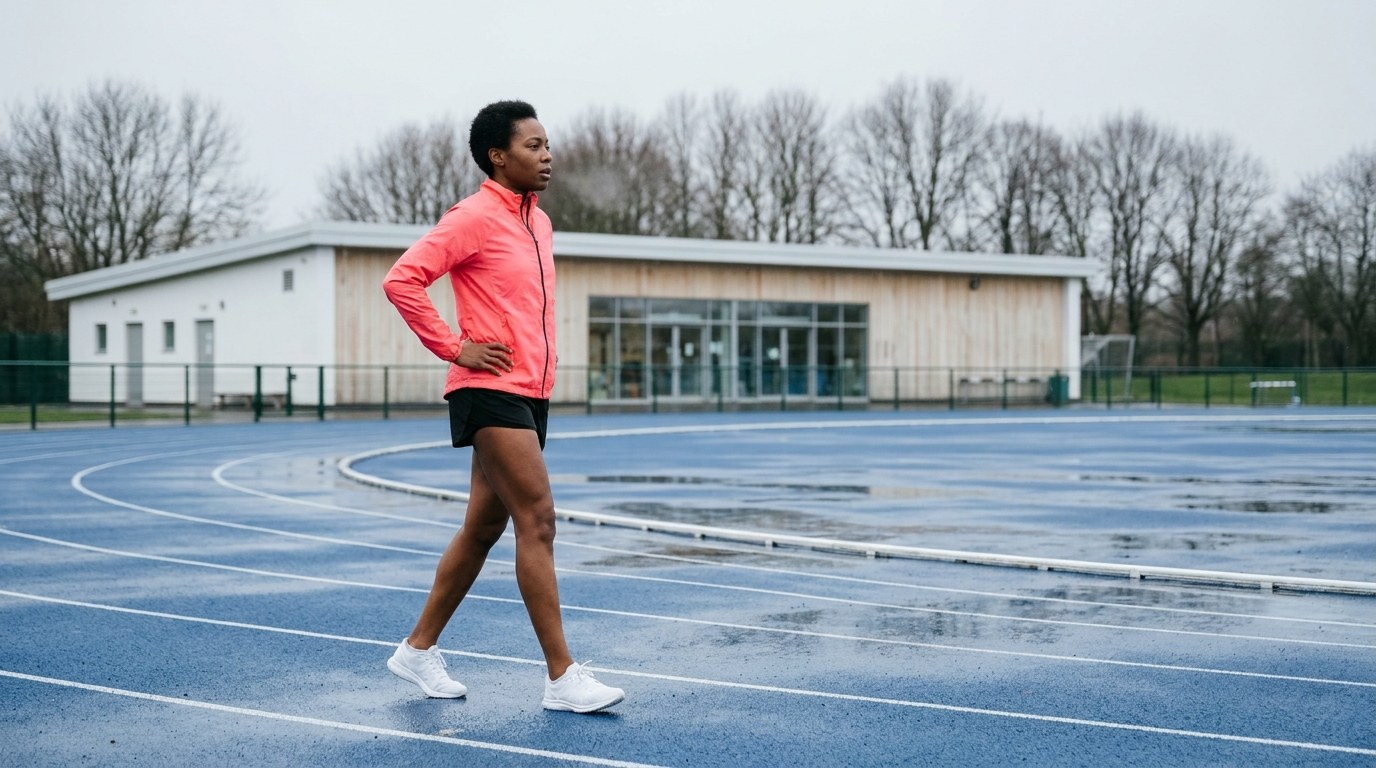
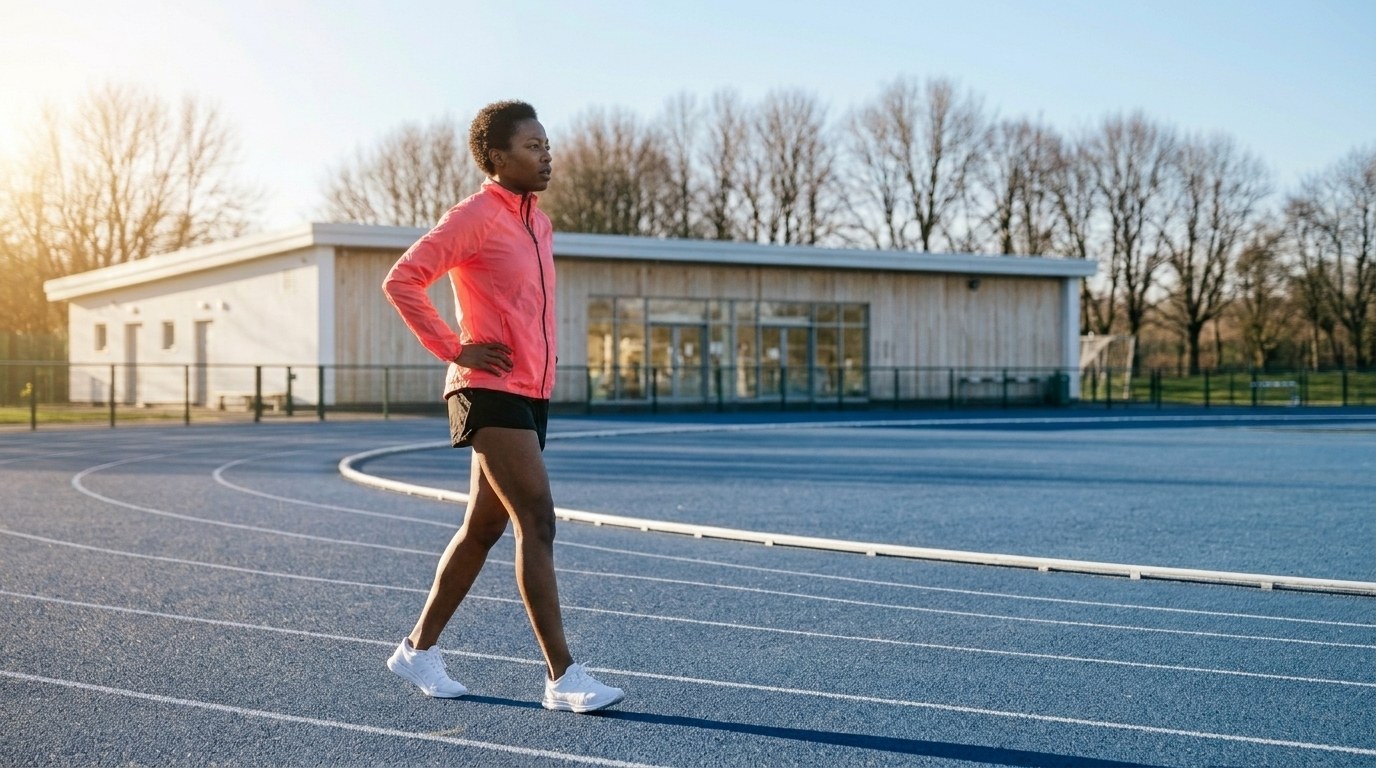
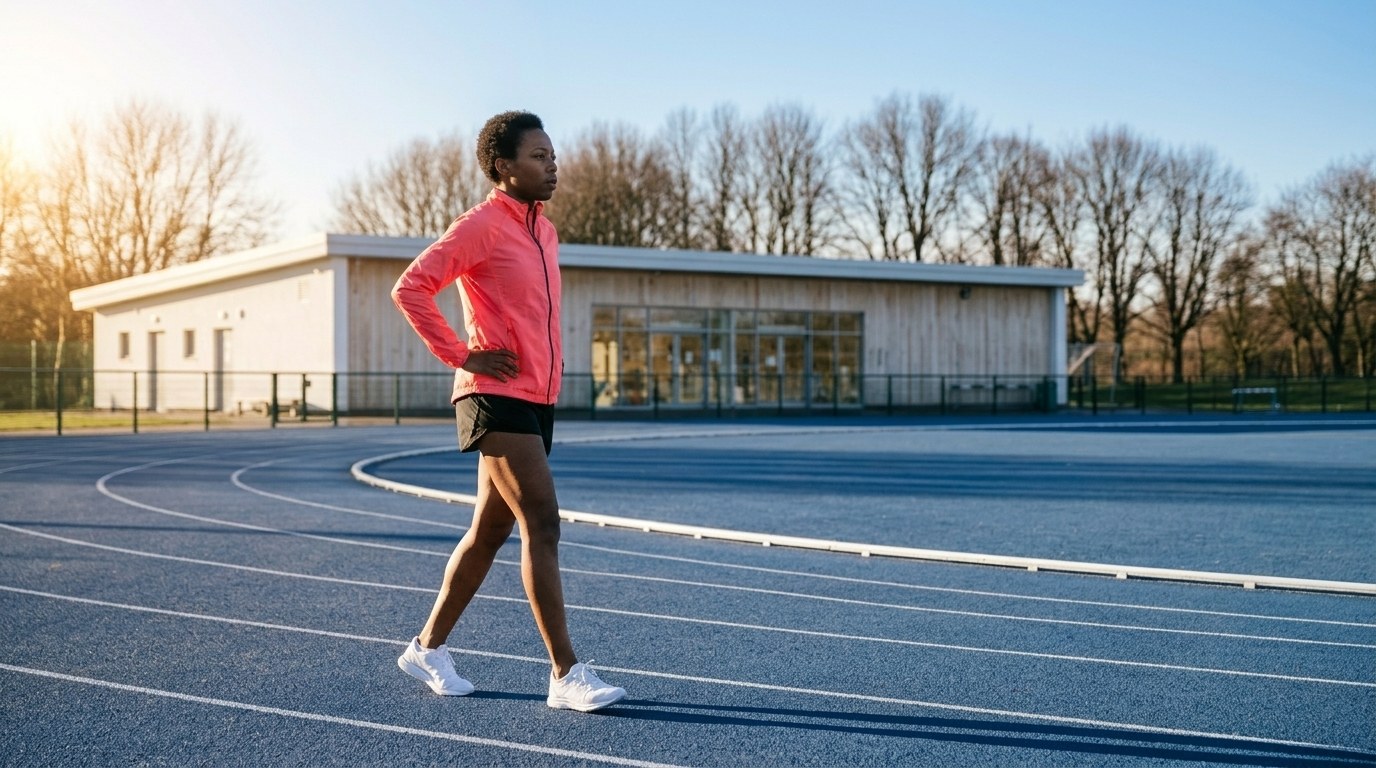
The second frame is the first one with a single instruction: change only the weather. Her stride, the clubhouse and the lane lines stay where they were. A year ago you would have rolled again and lost the picture you liked. Editing by instruction became a headline feature of the autumn models, FLUX 3 and Ideogram 4.5 among them.
Sports photograph. Full shot of a 38-year-old runner with brown skin and short black hair, in a coral-pink running jacket, black shorts and white running shoes, slowing to a walk on a blue athletics track just after rain, hands on her hips, breath visible, eyes on the lane ahead. Frame her side-on and left of centre, her full figure about half the image height, with shallow puddles on the track, a low white clubhouse with pale timber cladding and a row of bare trees behind her. Flat grey overcast light, soft shadowless, the wet track reflecting the sky; muted colour, the coral jacket the only strong colour. She does not notice the camera. Everything clean and well kept. Canon EOS R5 with RF 70-200mm f/2.8 at 85mm, f/4, 1/1000 second.
Change only the weather. Make it a clear morning with low sun from the left, long hard shadows, a dry track and a blue sky. Keep the runner, her pose, her face, her clothes, the clubhouse, the trees and the framing exactly as they are.
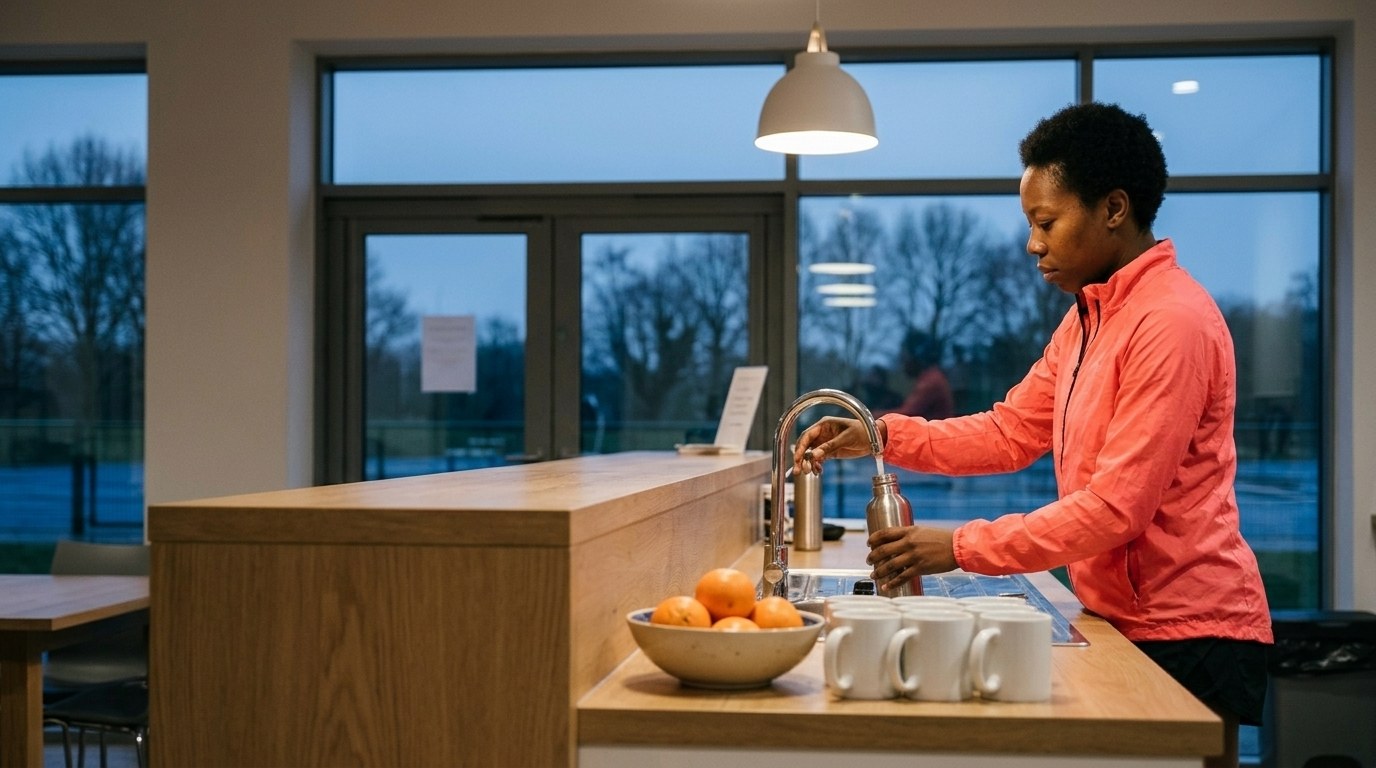
One reference image, a new room, a new light, the same woman. Google says its current models hold up to five people and fourteen objects steady across a set. That is a season of posts with one recognisable face. Use an invented person or someone who has agreed, and expect the face to drift over many edits.
Documentary photograph of the same woman as in the reference image, with the same face, the same short black hair and the same coral-pink running jacket. Medium shot of her filling a steel water bottle at the tap of a pale oak kitchen counter inside a contemporary clubhouse, eyes on the bottle, a bowl of oranges and a row of white mugs on the counter, a large window with bare trees behind her. Frame her side-on at the right of the frame from across the room. Early-evening dusk outside, one white pendant lamp lit above the counter, soft warm light on her face and hands; natural colour, the coral jacket the brightest thing. She does not notice the camera. Everything clean and well kept. Sony A7 IV with 35mm f/1.8 at f/2.8.
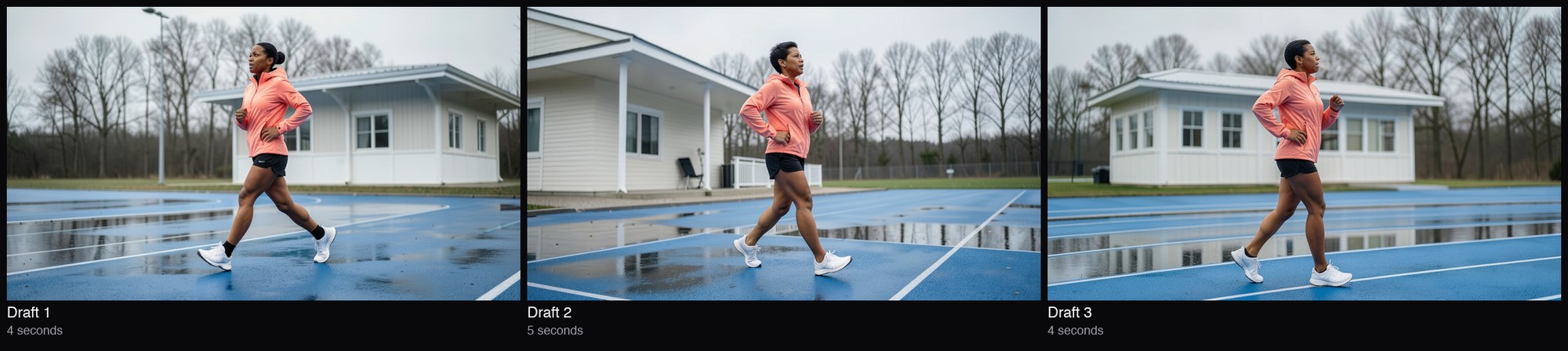
The runner prompt again, three times on FLUX.2 Klein 4B: four, five and four seconds, 2 credits each. Black Forest Labs released the Klein models in January and the smaller one runs on an ordinary graphics card. Three different women, three clubhouses: these are sketches for choosing a composition, and they cost almost nothing.
This badge left the model as an SVG file: seven paths in three colours that open in any vector editor and scale to the side of a van. Recraft V4 brought that in February. A good first sketch. A badge a club wears for twenty years still deserves a designer.
A flat vector badge for a running club: a white silhouette of a runner in mid-stride inside a solid coral-pink circle with a thin navy outer ring. Simple geometric shapes, two colours plus white, no text, no lettering, plain white background.
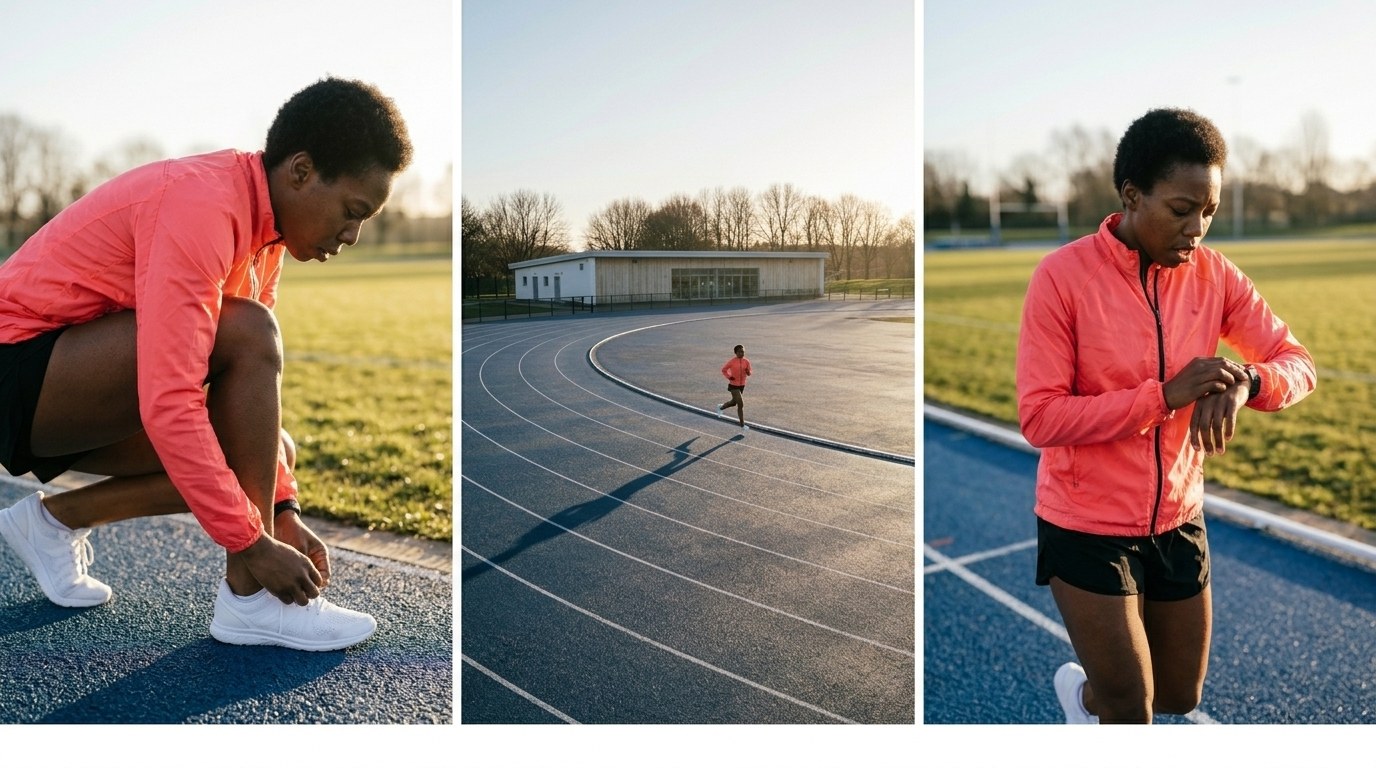
Three shots of one runner in one light, from a single prompt and one reference. We make stills, so this is a storyboard. Video tools made the same leap with sound: LTX-2 in January, then Kling 3.0 in February, produce clips with several shots and matching audio. Clips still run ten to twenty seconds.
A storyboard strip of three photographic film frames side by side in one image, separated by thin white gaps, all showing the same woman as in the reference image, with the same face, short black hair and coral-pink running jacket, on the same blue athletics track in clear low morning sun. Frame one, a close shot: she crouches at the trackside tying her white shoe. Frame two, a wide shot: she runs the bend, small in the frame, a long shadow beside her. Frame three, a medium shot: she stops the watch on her wrist just past the white finish line, breathing hard, eyes on the watch. Natural colour, the same light in all three frames. No lettering.
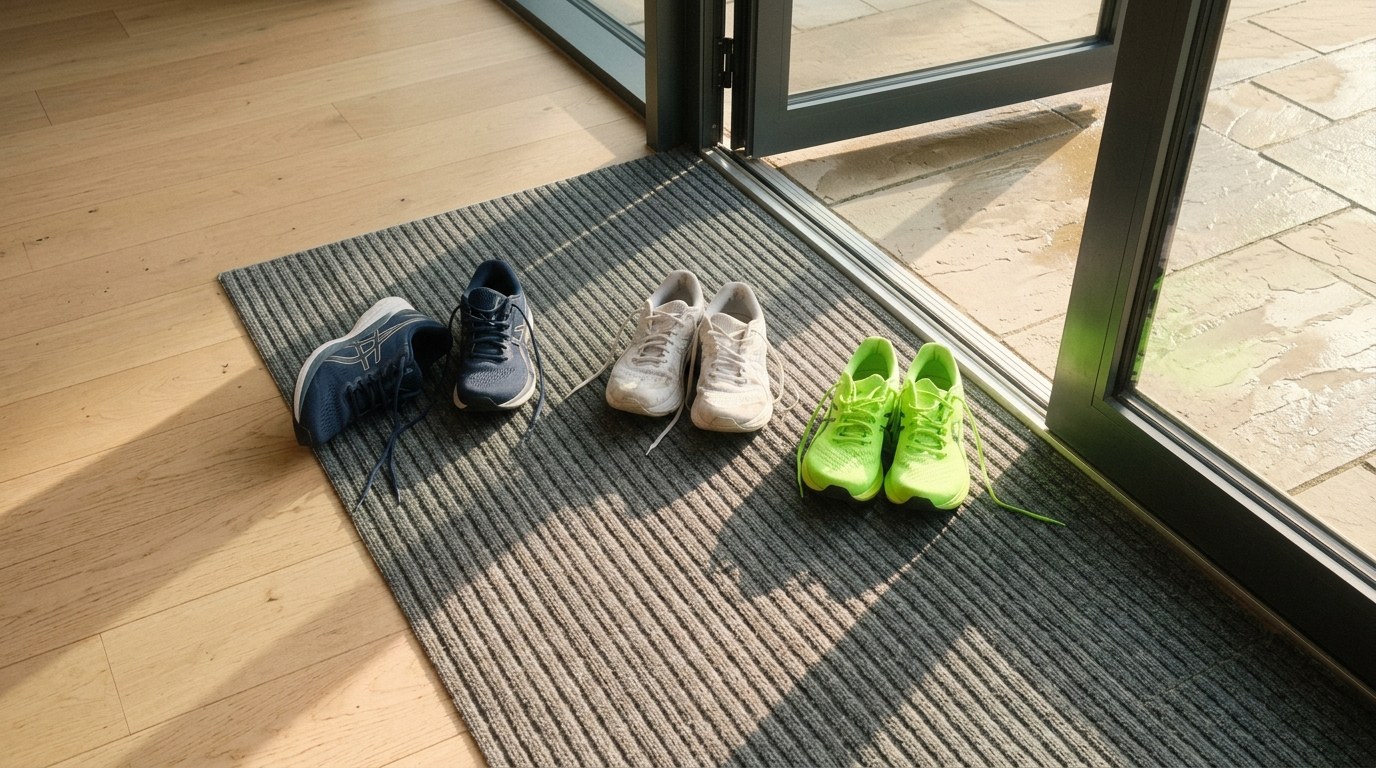
Nothing in this frame says how it was made. The file does. Google marks its image output with an invisible watermark, and in May OpenAI adopted the same one. When we opened the badge file from picture 5, a Content Credentials record sat inside it.
The law followed. The transparency rules of the EU AI Act have applied since 2 August, and tools already on the market must mark their output by 2 December. The marking is the toolmaker's job. The visible-label duty is aimed at deepfakes, so a club poster needs no sticker by law. We think saying so anyway is good manners. This is our reading and no legal advice.
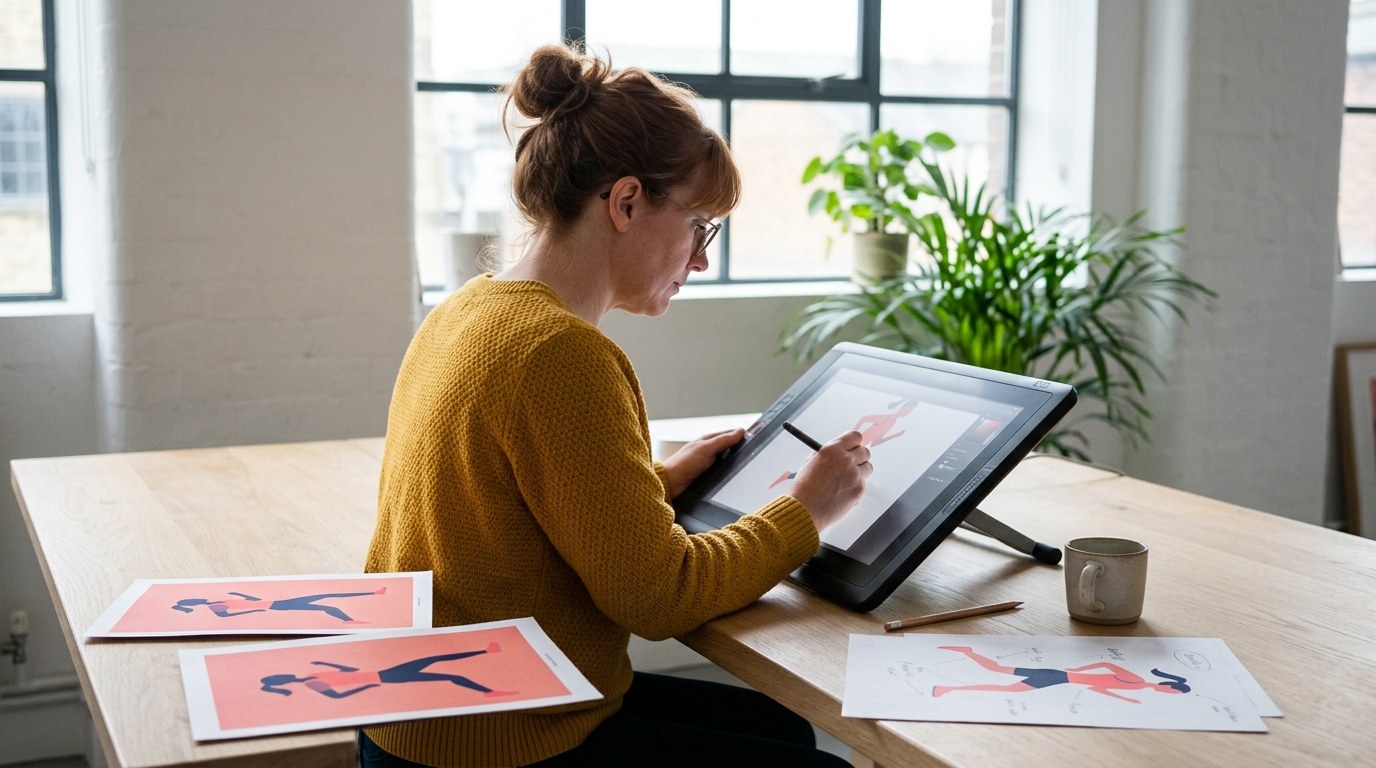
The job changed before it disappeared. In a 2026 survey by the UK Association of Illustrators, 62% of respondents had met AI images in a moodboard or brief and 36% had been asked to redraw one, according to a summary of the results; 46% said they had lost work. A Dutch survey of creative workers found 18% with fewer assignments, 44% who saw no effect and 35% who could not tell. If you bring a generated sketch to an illustrator, bring a fair fee with it.
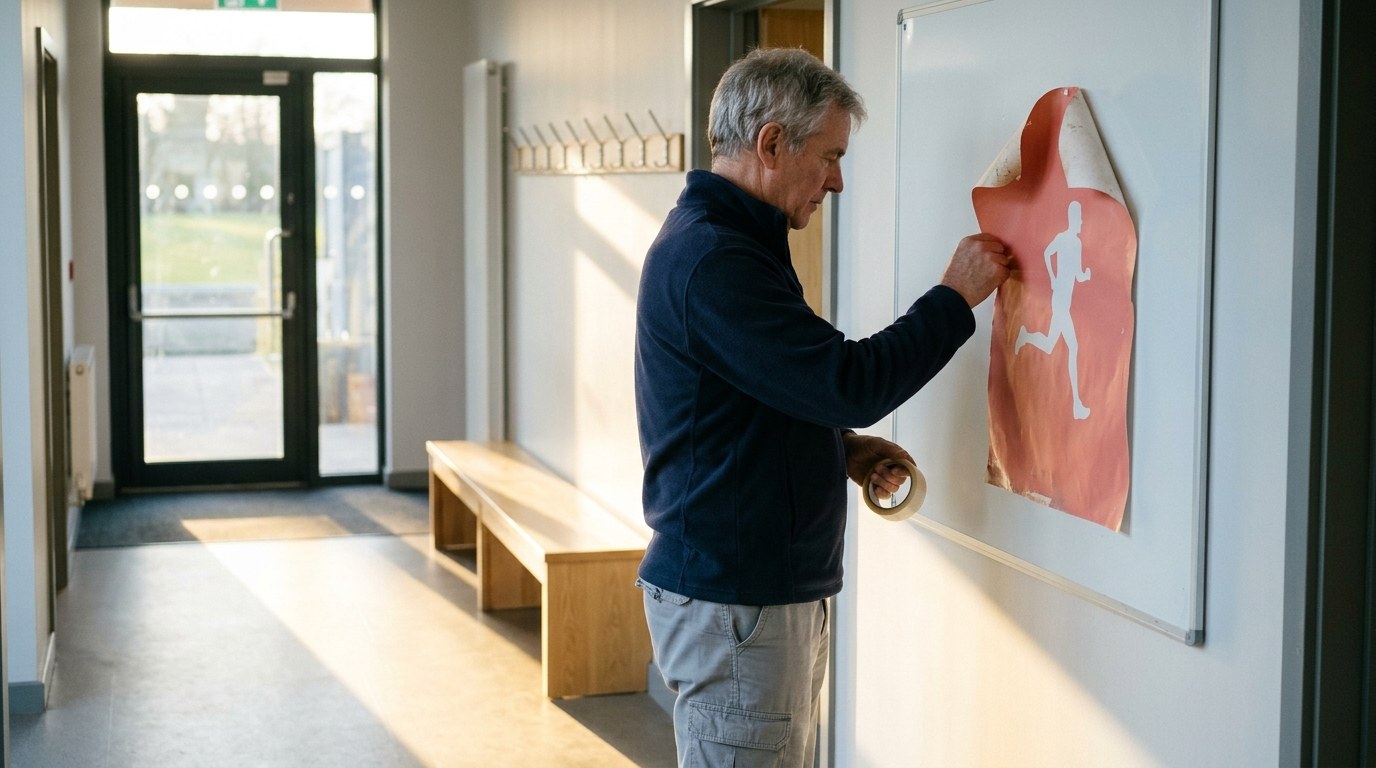
The most talked-about creative AI product of late 2025 was the Sora app. OpenAI announced its closure in March and switched it off in April. DALL·E left the API in May. Keep your prompts in a text file and your finished pictures on your own disk.
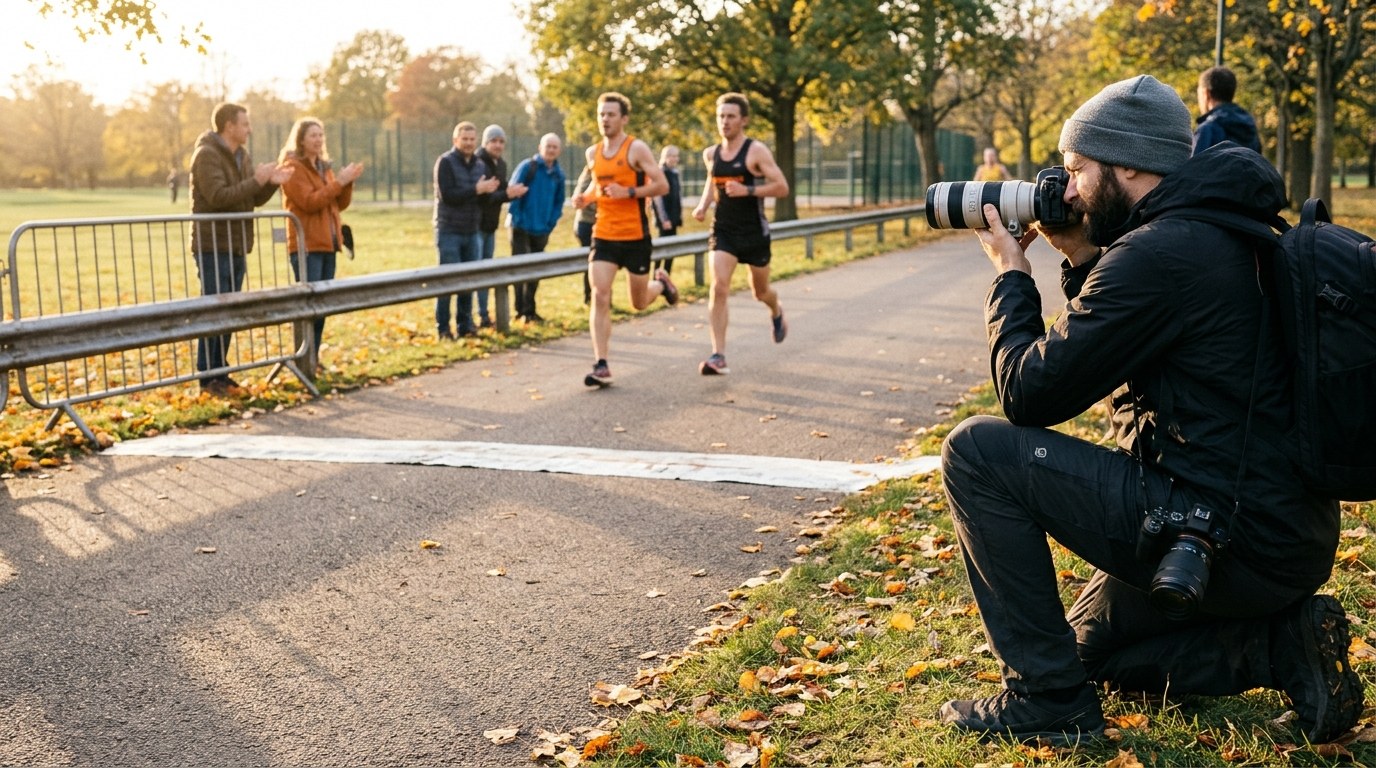
A model can make a picture of a race. It cannot make a picture of your race: who won, who came last and smiling, whose children held the tape. That is the photograph members ask for in January, and it needs a photographer. This frame is generated, which is fine for a story about tools and wrong for a race report.
Pictures 1 to 3 and 6 to 10 were made with Google Nano Banana 2.1 in Google Flow on 13 November 2026, one prompt and two tries each. The 2024 poster, the three drafts and the badge were made in the cgfaces Studio. The people are invented. The prompts are printed as we ran them.
№ 13 · IndustryAll stories
№ 15Industry
A forecast in seven pictures: one week of image making in a small bike shop in 2027, built only from tools that work today and rules that already have a date.
№ 14Design & AI tools review
What AI image models still get wrong in November 2026: 27 ordinary requests, two tries each, on a current model. It writes almost anything now. It cannot measure.
№ 12Design & AI tools review
One ordinary prompt, run through fourteen AI image models released between October 2024 and October 2026. Read the price card to see what two years changed.